Decoration Direction Is Defined by the Garment
Before a decoration or finishing route moves into sampling, it is aligned with the fabric, stretch, product role, intended handfeel, and expected wash response of the garment.
What Defines the Working Direction
Decoration is developed as part of the garment rather than selected as an isolated technique.
Fabric Structure & Surface
Jersey, pique, fleece, and other knit surfaces create different bases for decoration and garment finishing development.
Stretch & Recovery
The working route is aligned with how much the decoration area needs to stretch and recover with the garment.
Product Role
Lifestyle, performance, and heavier knit garments can require different visual, tactile, and functional priorities.
Handfeel
Print build, embroidery density, and surface treatment are aligned with the intended softness, weight, and touch of the garment.
Wash & Aftercare Expectation
The development direction considers how the intended visual and tactile effect should remain, soften, or intentionally change after washing.
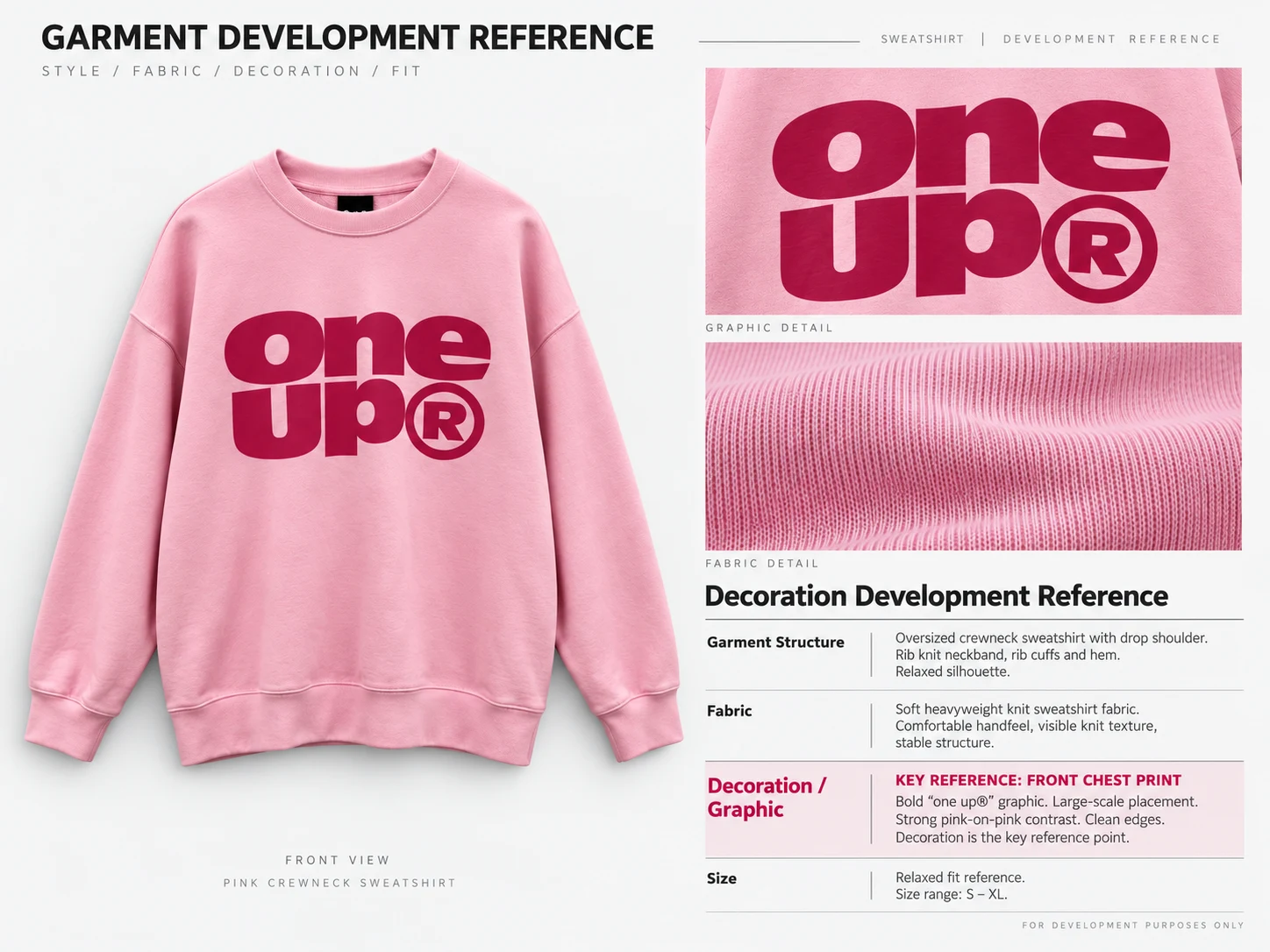
The result is a defined decoration and finishing direction ready to move into artwork, process sampling, and approval.
Different Effects Require Different Development Routes
Decoration and finishing are developed through different process routes depending on the intended visual result, fabric behavior, handfeel, garment construction, and finished appearance.
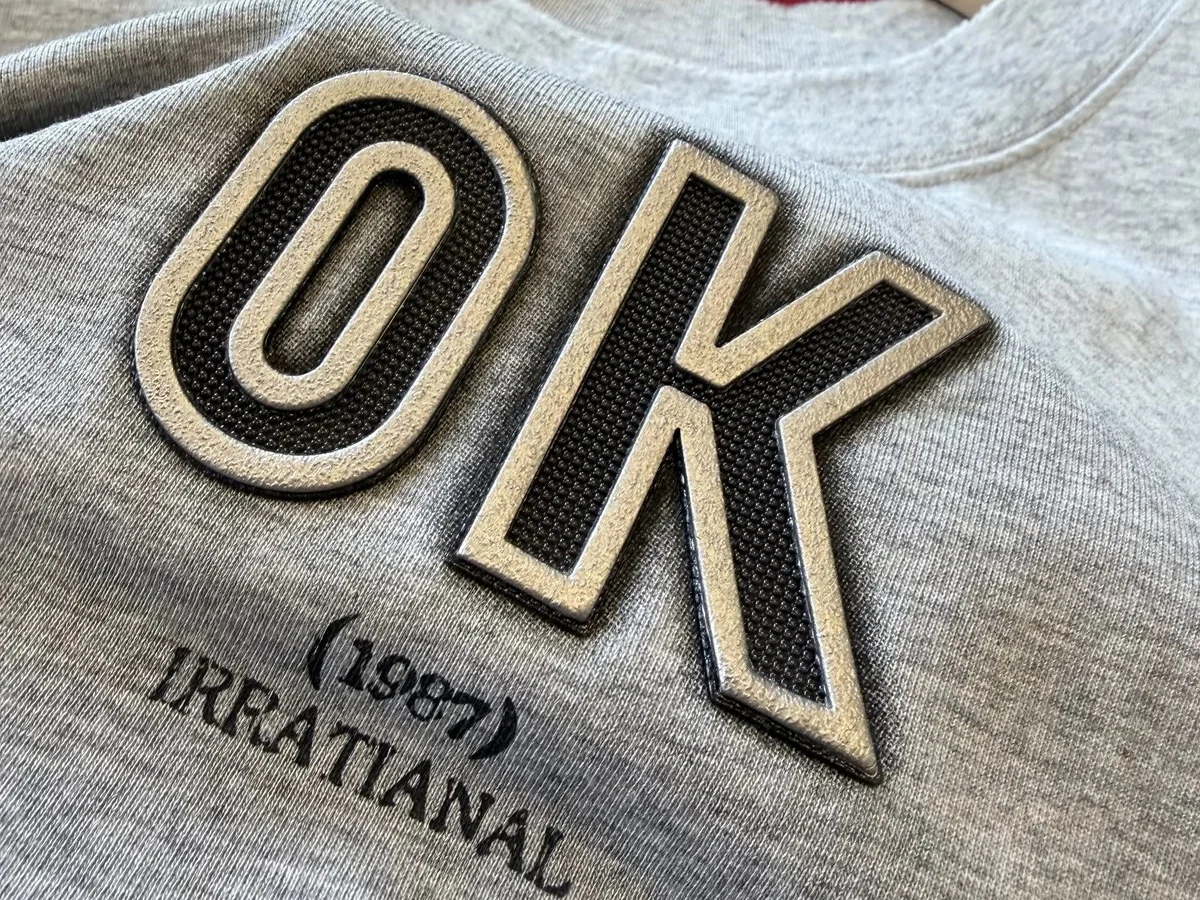
Printing & Transfer
Screen print, digital print, puff print, heat transfer, and related graphic effects are developed around surface, stretch, handfeel, placement, and the intended visual result.
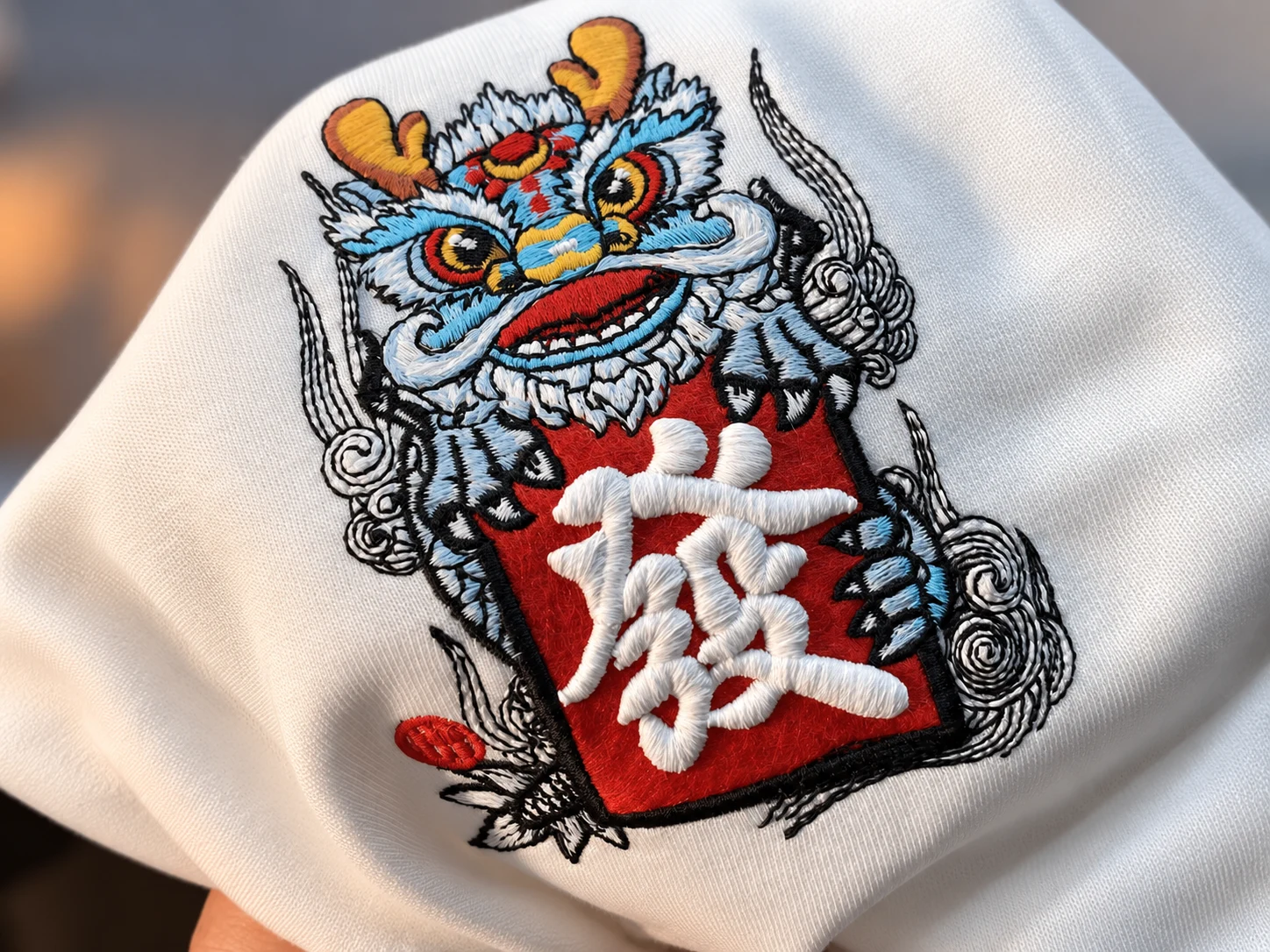
Embroidery & Patch
Stitch structure, density, backing, applique, patch construction, and placement are aligned with fabric stability and garment structure.
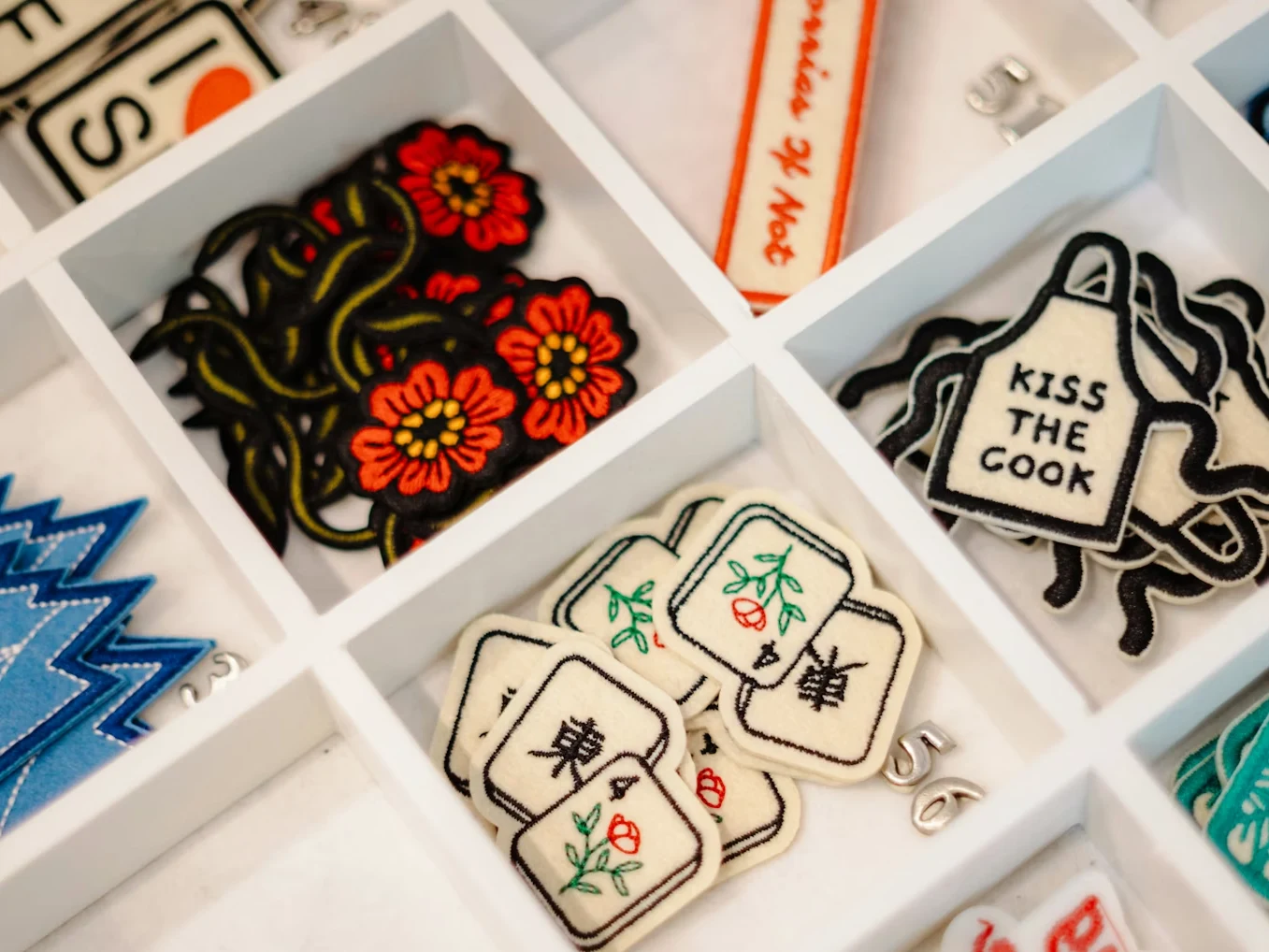
Labels, Badges & Trims
Woven labels, silicone badges, patches, and related trims are developed around attachment method, garment position, construction, and intended brand presentation.
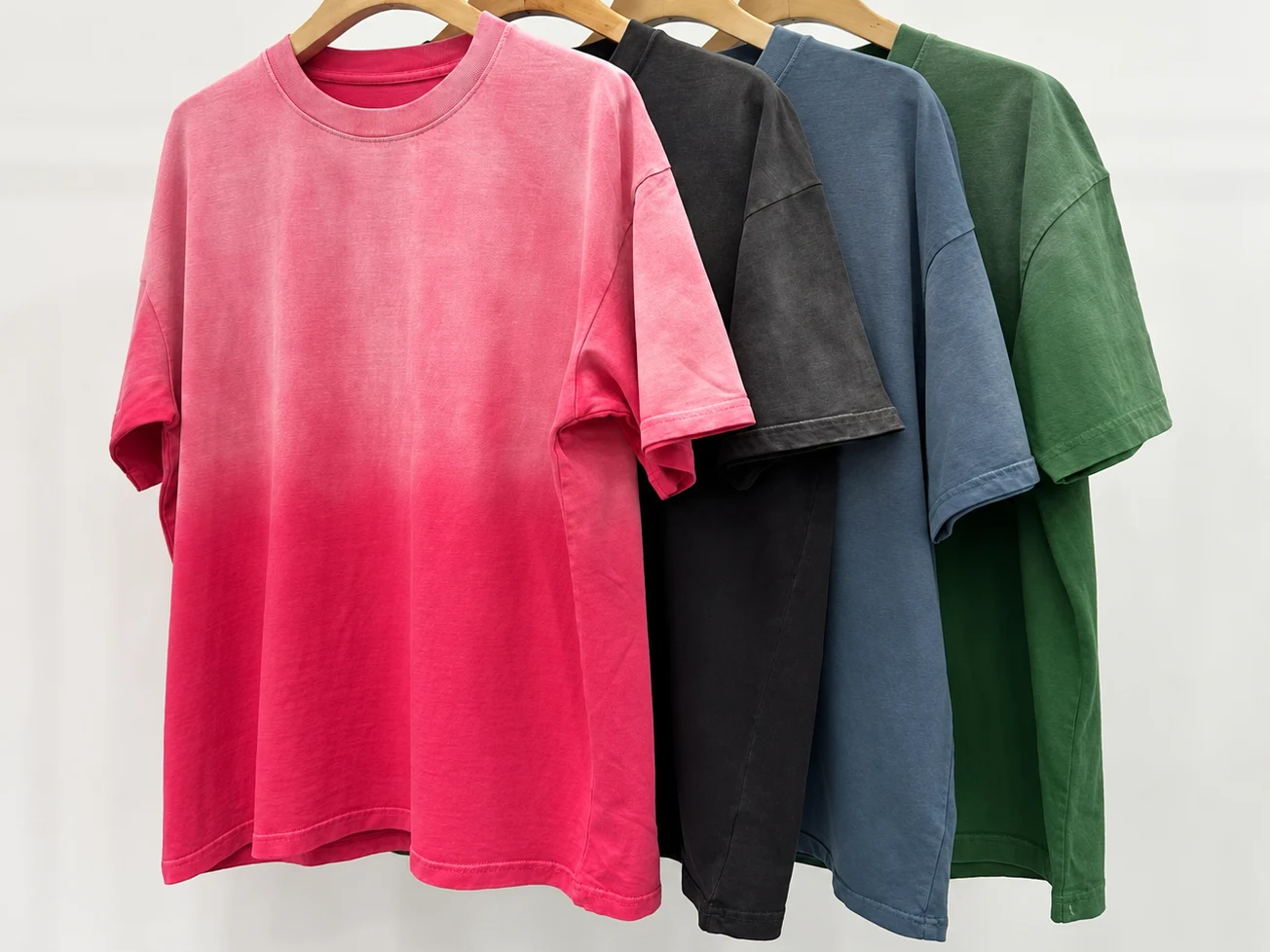
Garment Washing
Garment wash, enzyme wash, faded appearance, and worn-in effects are developed around softness, color response, surface character, and the intended finished garment.
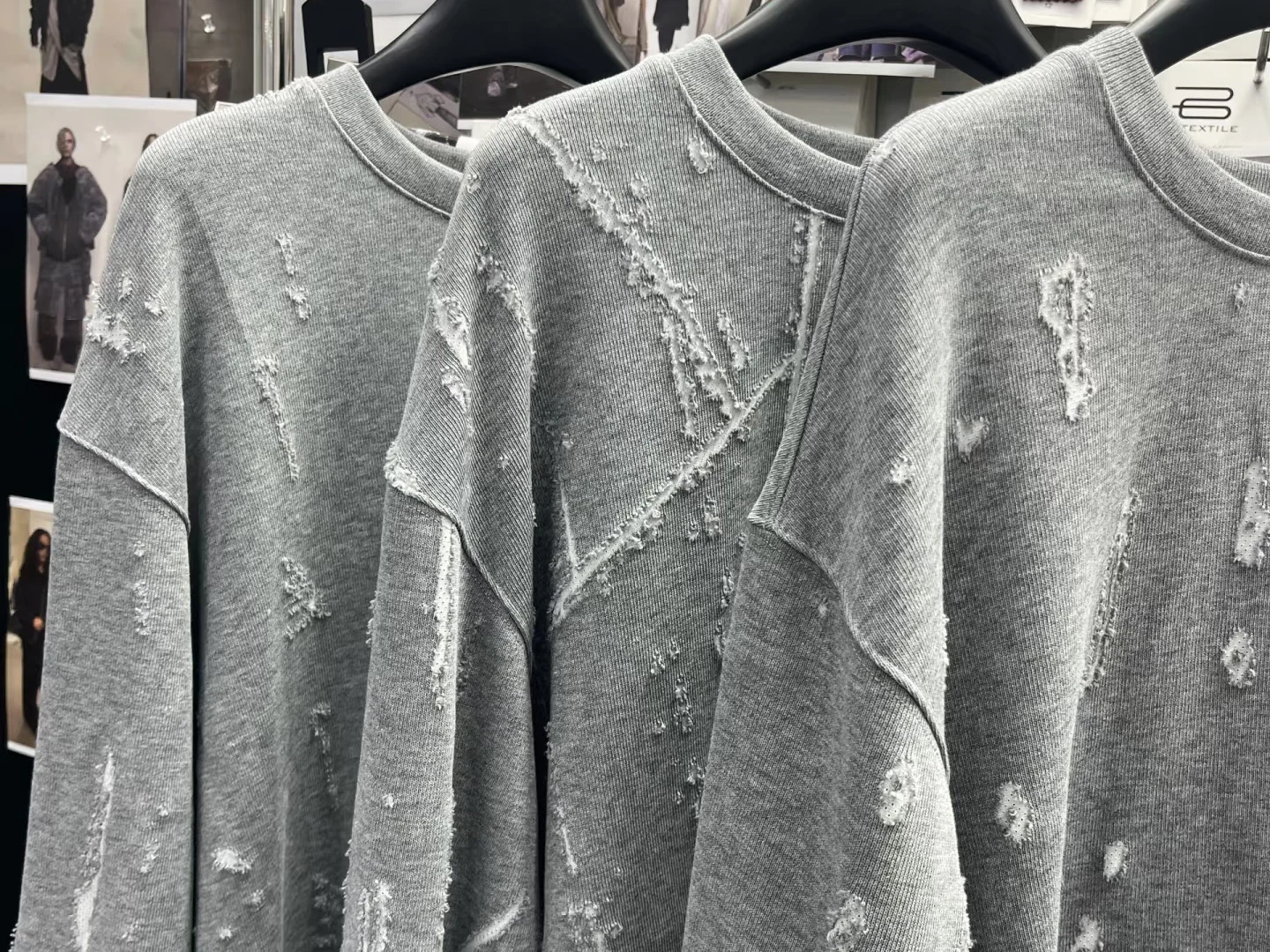
Distress & Surface Effects
Grinding, abrasion, frayed edges, controlled distressing, and related treatments are defined around the intended texture, character, and garment result.
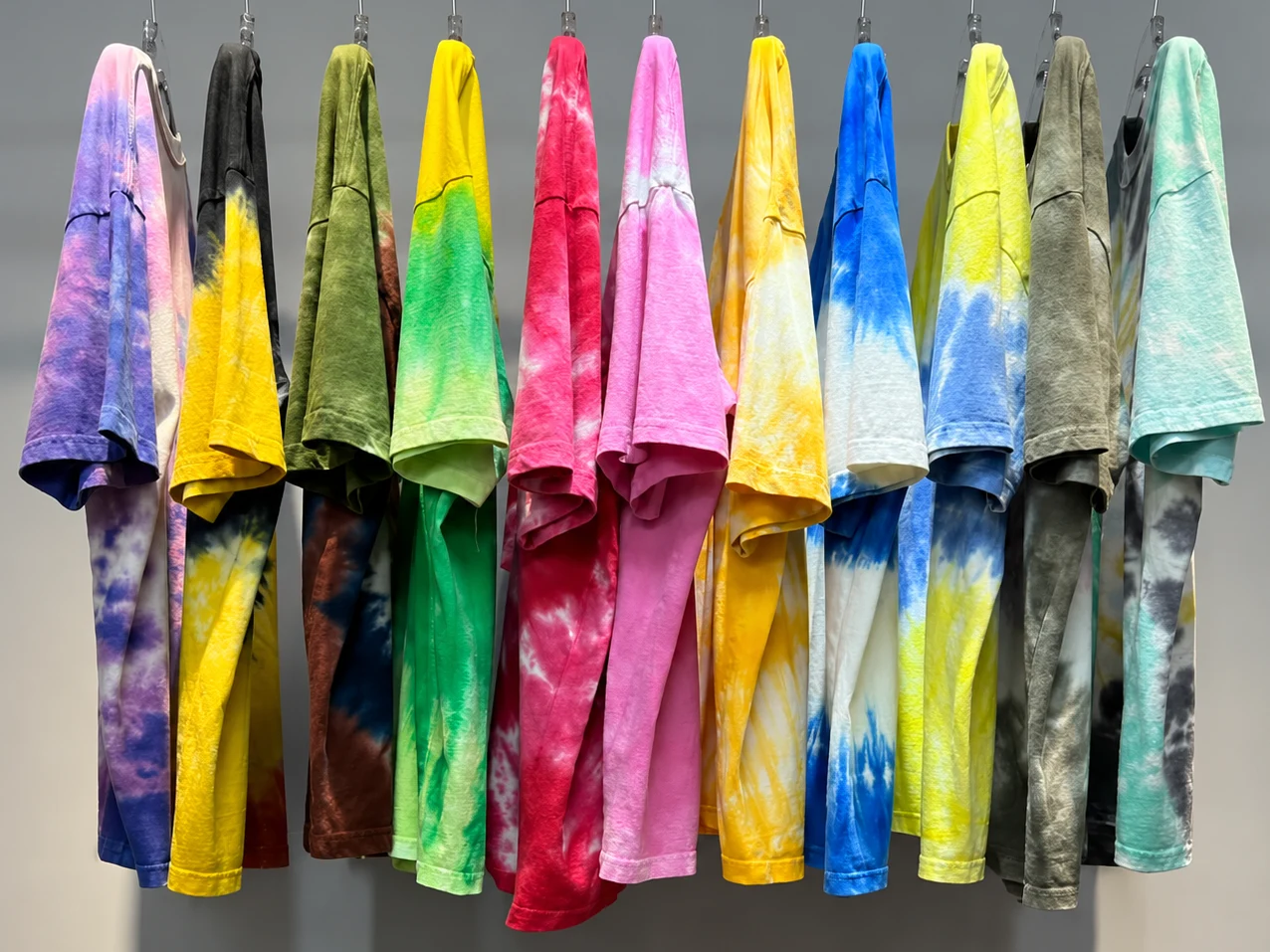
Spray, Dip & Color Effects
Spray, dip dye, garment dye, gradient, tie-dye, and directional color effects are developed around the intended appearance and garment direction.
The selected process route defines what must be sampled and aligned before the finished effect becomes an approved garment reference.
Approval Moves From Artwork to the Garment Result
Decoration and finishing are not approved from artwork alone. The working direction moves through process sampling, placement, color, and effect alignment before becoming part of the finished garment reference.
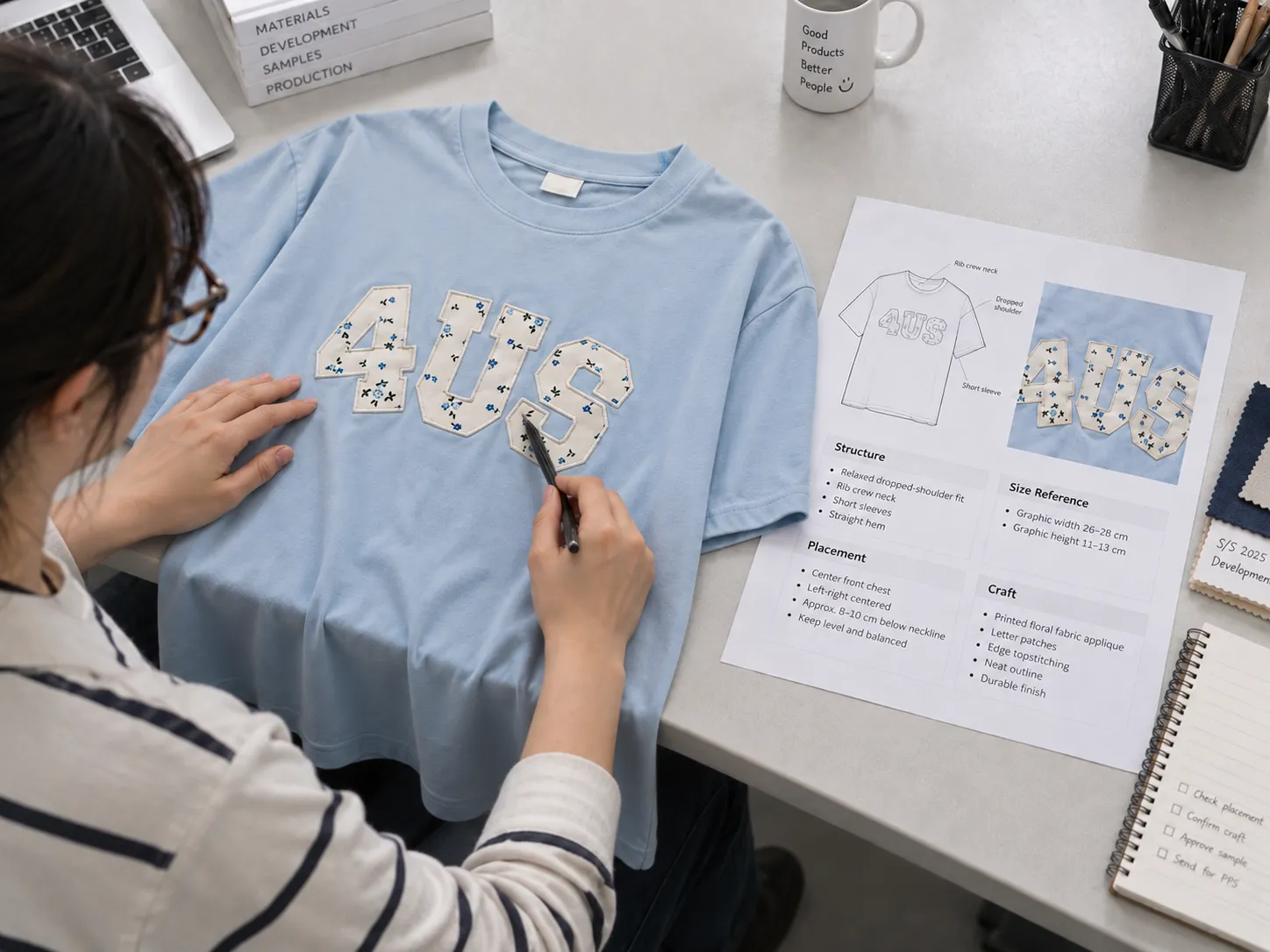
Artwork Direction
Artwork, scale, intended position, color direction, and the target visual effect establish the starting point for process development.
Strike-Off or Process Sample
The selected process route is sampled on a relevant material or garment reference so surface, handfeel, and visual character can be reviewed together.
Placement & Scale
Position and proportion are aligned with garment construction, silhouette, seams, panels, and the intended visual balance.
Color Reference
Decoration color is aligned with the approved garment direction, including intended contrast, tonal relationship, and finished appearance.
Effect Approval
The final visual, surface, texture, and handfeel direction is approved on the intended garment before it becomes the working production reference.
Approval converts the decoration concept into a defined garment reference that can be carried forward into production alignment.
The Finished Garment Becomes the Working Reference
Once decoration and finishing are approved on the intended garment, the accepted result defines the visual, placement, color, surface, and handfeel direction for later production alignment.
Overall Effect
The accepted garment records the intended visual result rather than relying on artwork or an isolated process sample alone.
Placement & Scale
Decoration position and proportion remain connected to the construction, silhouette, and size of the finished garment.
Color Relationship
Decoration color remains connected to the approved garment color and the intended contrast, tonal balance, or finished effect.
Surface, Handfeel & Softness
Brushing, peaching, softness, surface character, and touch remain part of the accepted finishing direction and finished garment reference.
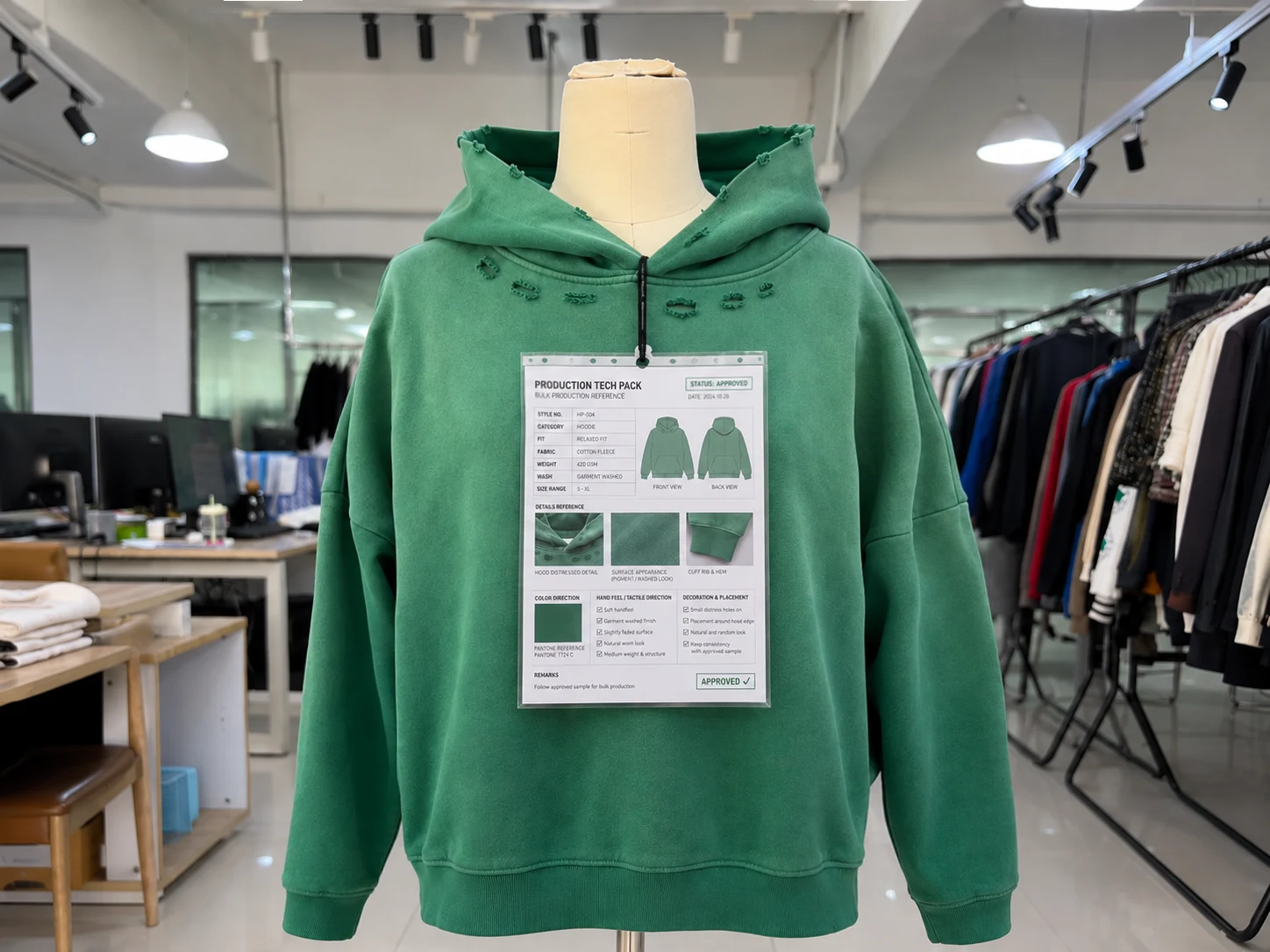
The approved garment defines the intended finish. Quality standards determine how later production is compared against it.