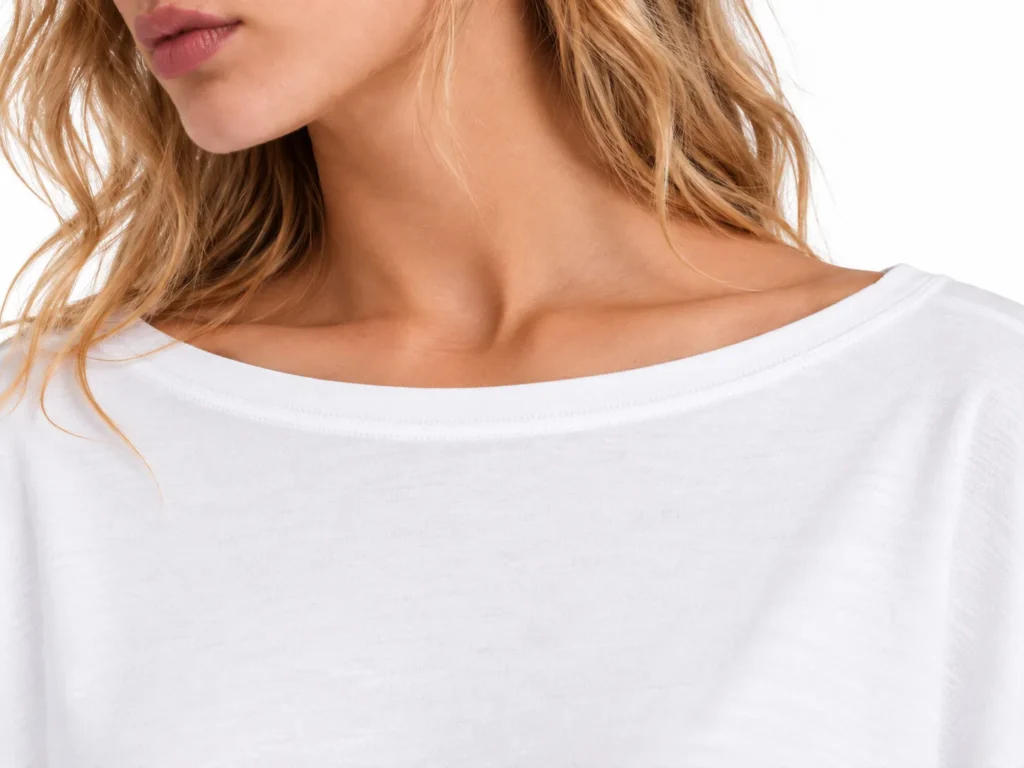
Wide Boat Neckline & Coverstitch Finish
The wide neckline is finished by turning the self fabric and securing it with clean coverstitching. No separate rib binding is used, keeping the neckline light, flexible, and visually minimal.
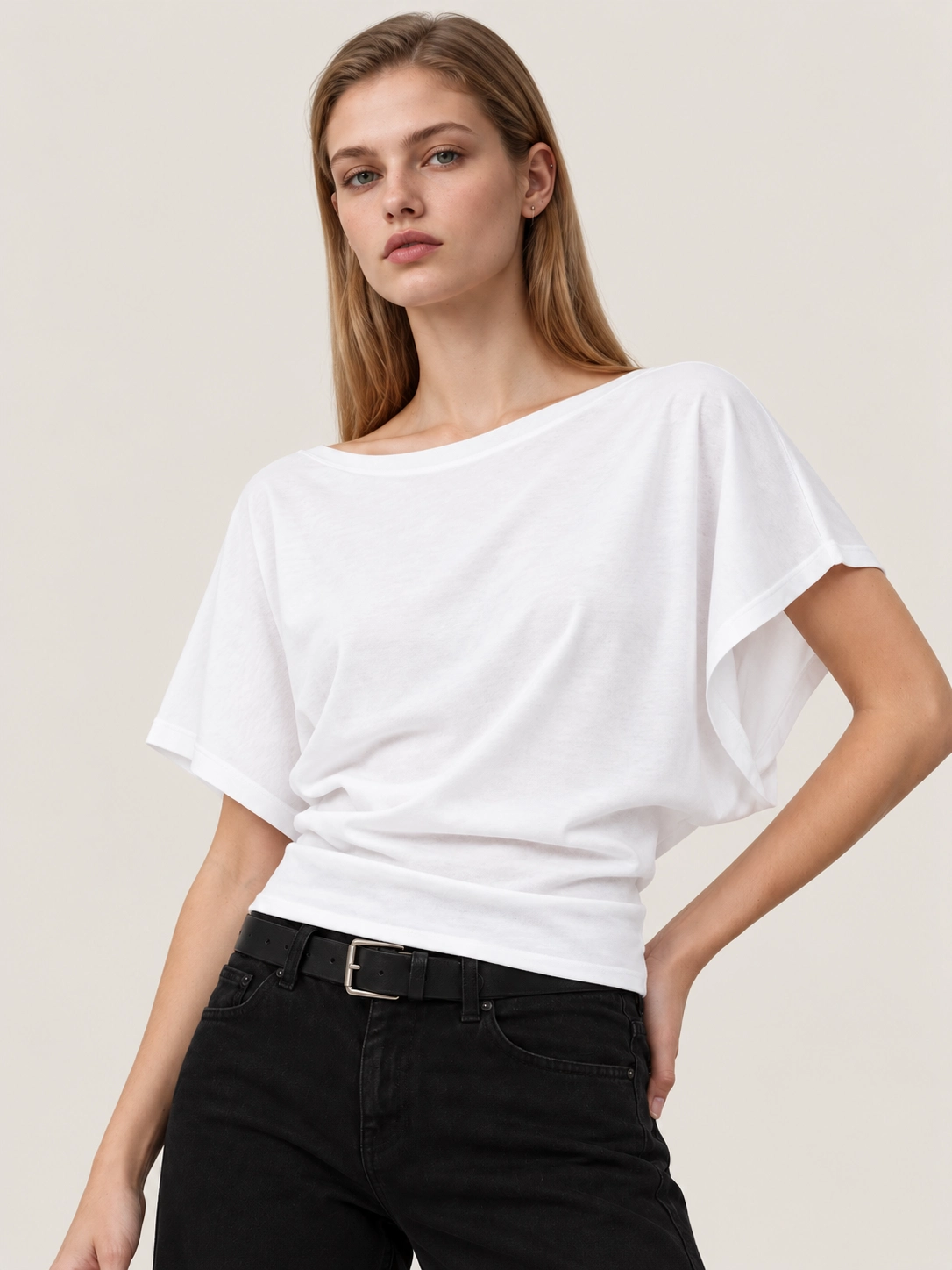
A relaxed short-sleeve T-shirt defined by a wide boat neckline, soft dolman sleeves, and fluid cotton jersey drape. Self-fabric coverstitch finishing keeps the neckline, sleeve openings, and hem clean without separate rib trims.
This reference style is defined by how silhouette, construction and intended use work together before material and production specifications are finalized.
Relaxed short-sleeve T-shirt with a wide boat neckline that can sit naturally across the collarbones or be styled slightly off shoulder. The dolman sleeve construction creates a soft shoulder-to-sleeve drape, while a center-back seam provides additional garment structure.
Relaxed, fluid, and easy-fitting. Designed around natural jersey drape rather than compression or high stretch, with proportion and neckline stability verified during sampling.
Material choice, stretch and recovery, seam positioning and fit should be aligned through sampling, wash review, fit verification and pre-production approval before bulk production.
Key construction points are reviewed to align seam placement, proportion and finishing before production.
The wide neckline is finished by turning the self fabric and securing it with clean coverstitching. No separate rib binding is used, keeping the neckline light, flexible, and visually minimal.
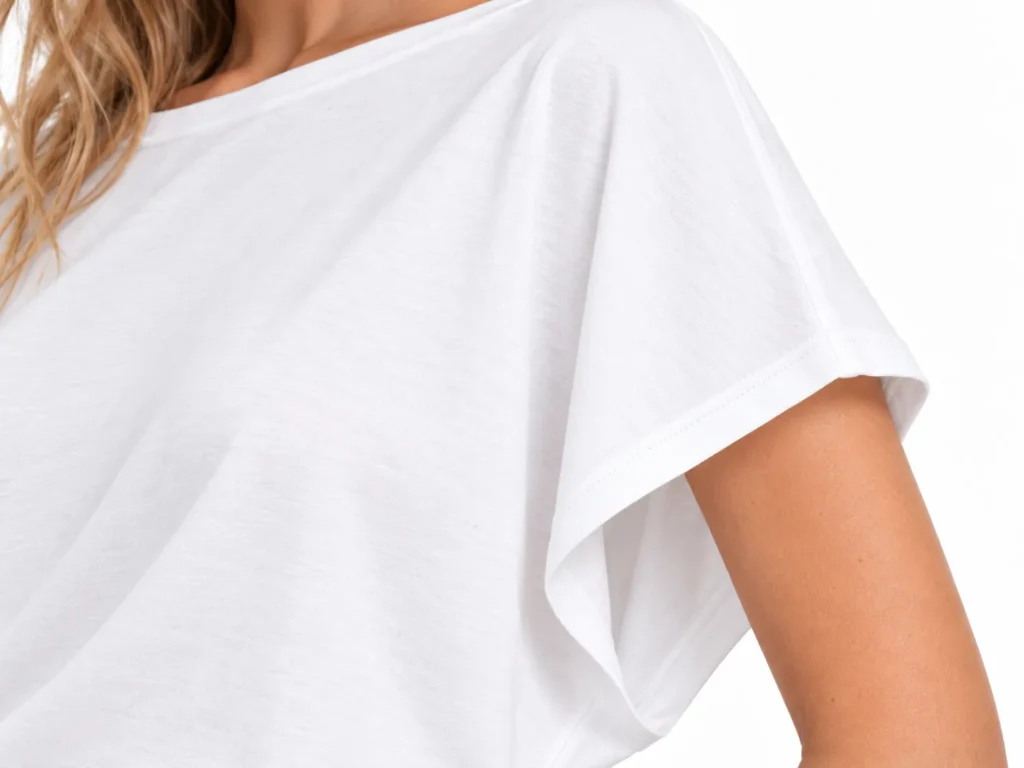
The short dolman sleeve extends naturally from the relaxed upper-body shape. The sleeve opening uses the same body fabric with a turned coverstitched edge rather than a separate cuff.
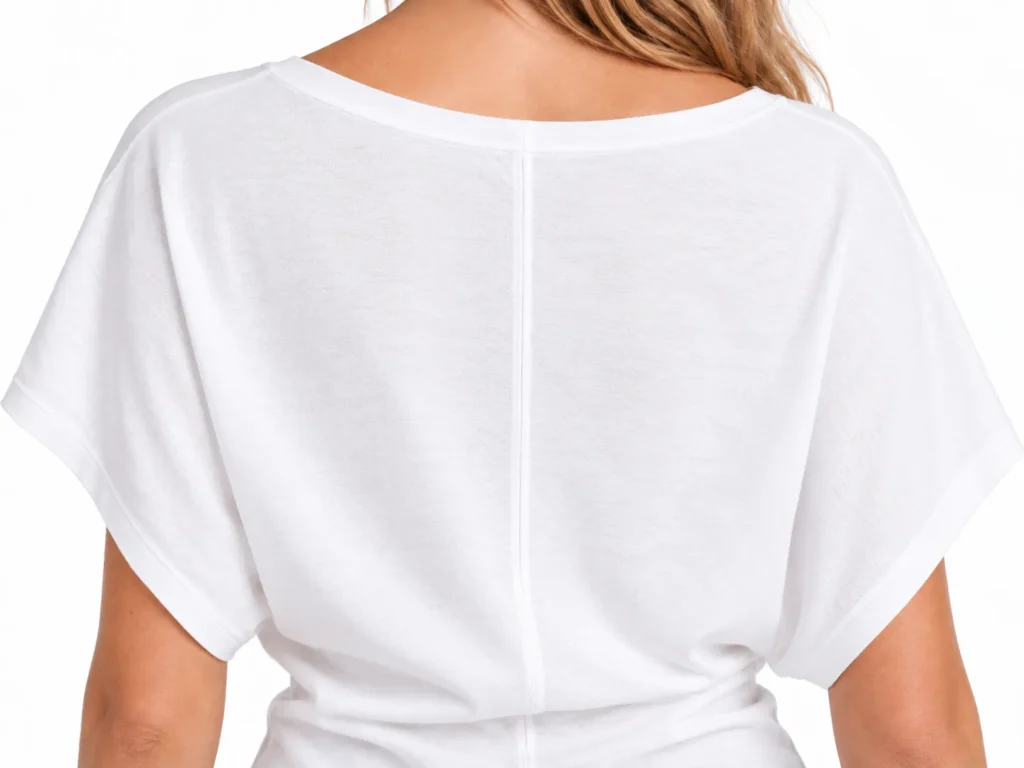
A clean center-back seam defines the rear construction while maintaining the soft drape of the single-jersey body. Seam alignment and appearance should remain controlled after washing and finishing.
Material selection is reviewed together with composition, weight, stretch, recovery and wash response so the approved reference can be translated into repeatable production specifications.
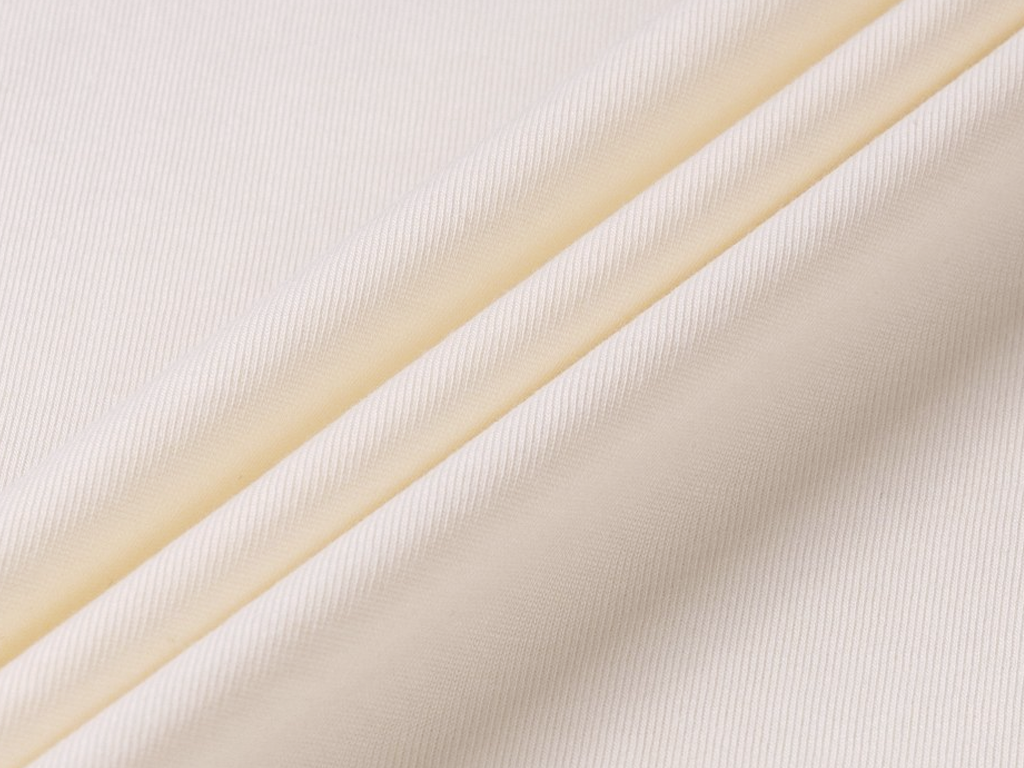
B1789 20S/1 compact cotton single jersey, 100% cotton. Reference width: 182 cm before wash and 173 cm after wash. Reference weight: 195 GSM before wash, approx. 210 GSM after hang drying and 216 GSM after tumble drying. Hang-dry shrinkage reference: approx. -5%.
Clean self-fabric construction with coverstitch finishing at the neckline, sleeve openings, and bottom hem. Print, transfer, or small-scale embroidery can be reviewed according to artwork, placement, and fabric behavior during sampling.
Before scale, the style is reviewed through defined references so material, fit, construction and finishing remain aligned from sampling into production.
Confirm composition, fabric structure, weight, handfeel, stretch and recovery against the approved material direction.
Review measurements, panel balance, seam placement and construction details against the approved sample and size requirements.
Check shrinkage, dimensional response, surface appearance and relevant performance requirements before production release.
Align approved sample, material reference, decoration standard and production notes before the style moves into repeatable bulk execution.
Product applications help define what the garment needs to become. The next step is to bring the available references, material expectations, construction requirements, approval criteria and order plan into one project evaluation.
Already have a product direction, reference sample, or technical brief?
Start a Project Evaluation →Project evaluation, not an instant quotation.