Reference Style KM-DR-001

Custom Women’s Ribbed Racerback Maxi Dress with Back Cutout and Side Slit

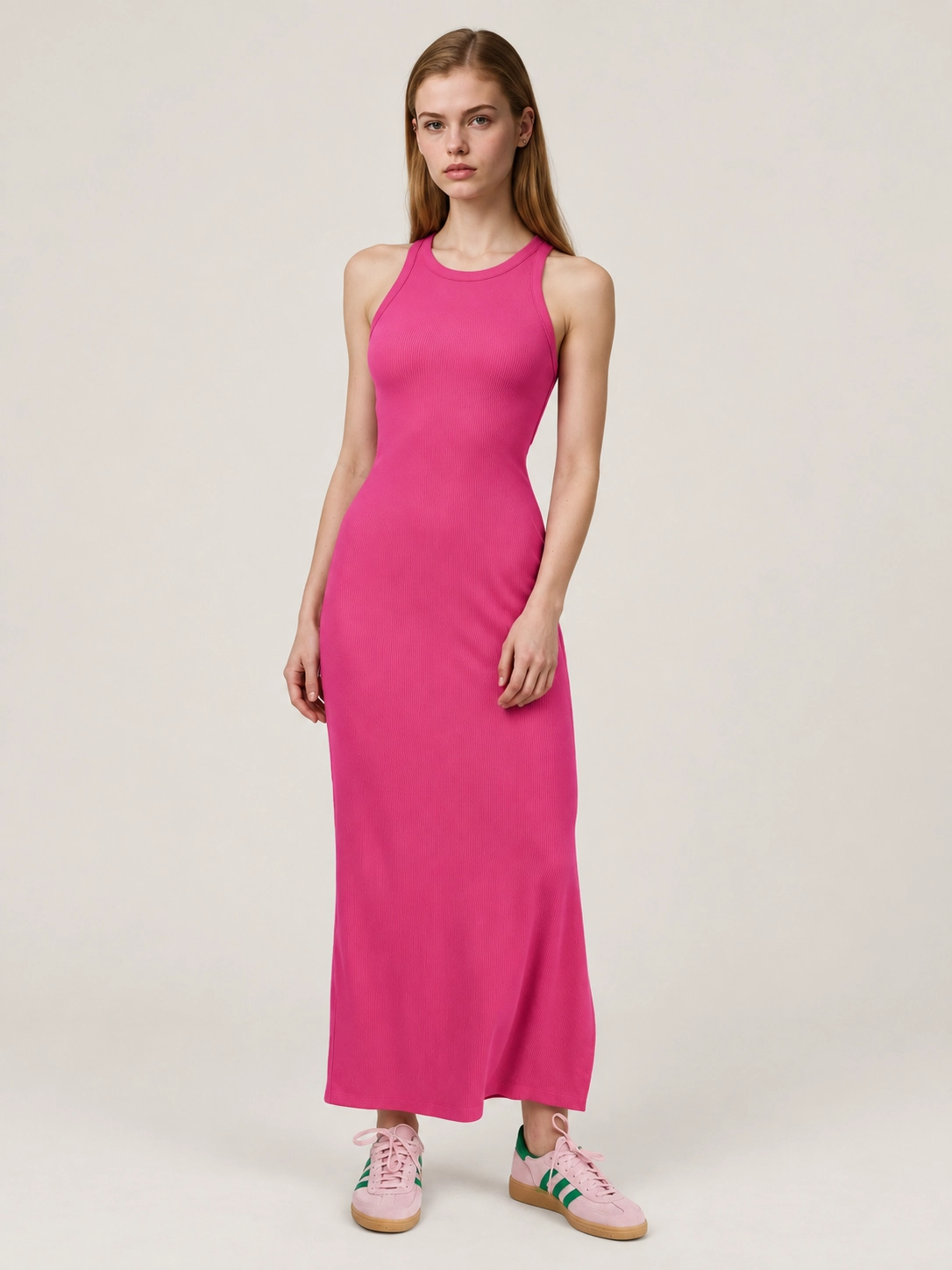
A women's sleeveless ribbed maxi dress featuring a close-fitting silhouette, racerback construction, a curved lower-back cutout, and a side slit. The hot pink design combines fine vertical rib texture with defined neckline and armhole finishes, creating a streamlined dress suitable for casual and lifestyle collections.

Product Type
Knit Dress
Fit & Silhouette
Slim
Sleeve Construction
Sleeveless
Garment Length
Longline
Fabric Structure
Rib
Use Direction
Casual, Lifestyle

Custom Women’s Ribbed Racerback Maxi Dress with Back Cutout and Side Slit

SKU: KM-DR-001 Category:

Product Definition

This reference style is defined by how silhouette, construction and intended use work together before material and production specifications are finalized.

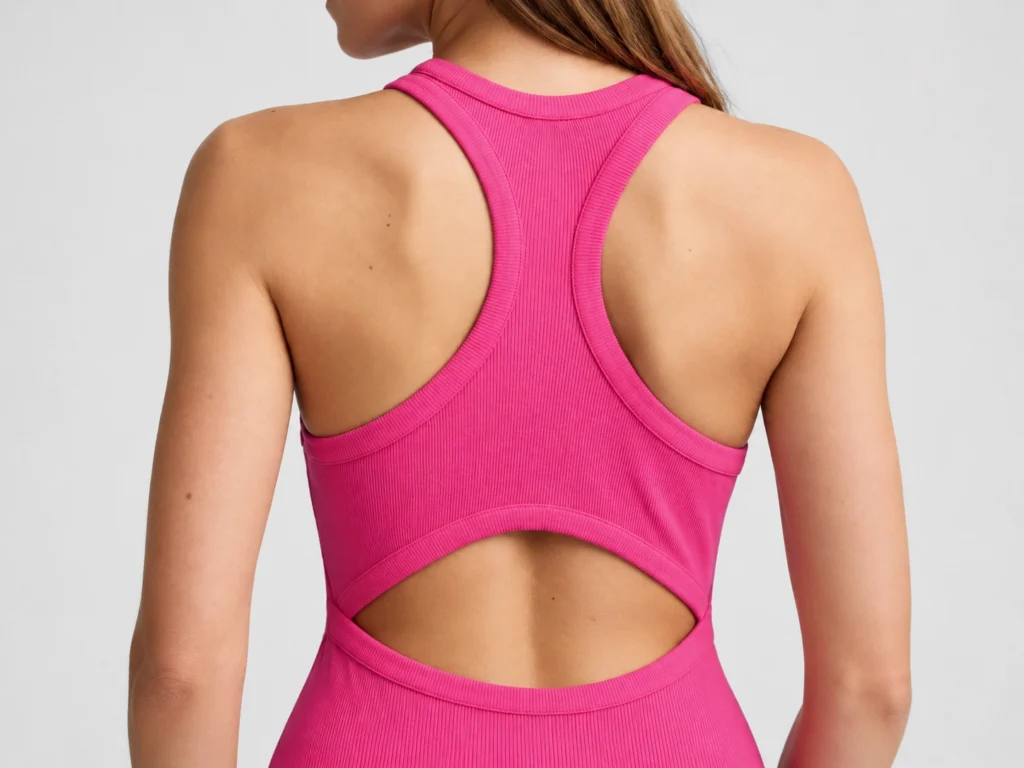
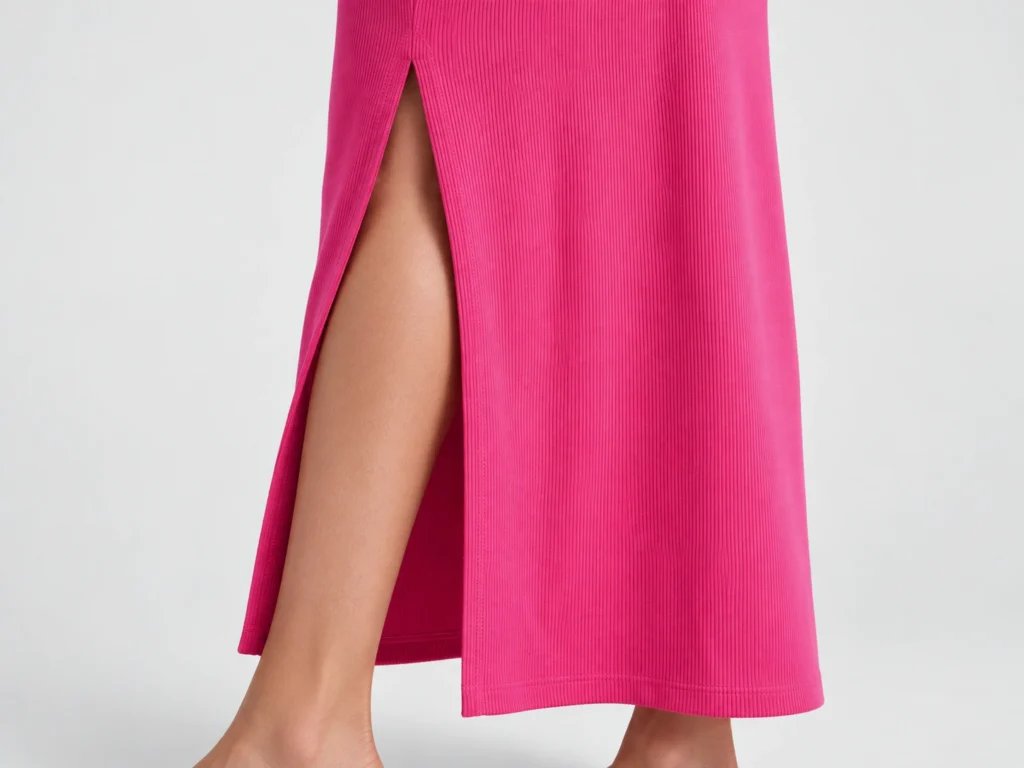
This sleeveless maxi dress features a high crew neckline, narrow shoulder straps, a fitted body silhouette, and an ankle-length hem. The back incorporates a racerback upper section with a curved cutout across the lower back, framed by matching fabric bands. A side slit extends upward from the lower hem to allow easier movement. The garment is constructed from fine vertical rib knit fabric.

Development Direction

Designed for casualwear and lifestyle applications where close-fitting comfort and natural movement are priorities. The rib knit construction is intended to accommodate body movement while maintaining a defined silhouette. Development priorities include stretch recovery, neckline stability, comfortable armhole openings, secure cutout-edge construction, and consistent garment length after laundering.

Material choice, stretch and recovery, seam positioning and fit should be aligned through sampling, wash review, fit verification and pre-production approval before bulk production.
Construction & Finish

Key construction and finishing details defined for this reference style.

Neckline Type
Crew Neck
Neckline Finish
Bound
Shoulder Construction
Sleeveless / Racerback
Seam Construction
Side Seam
Hem Finish
Turned Hem

Construction Details

Key construction points are reviewed to align seam placement, proportion and finishing before production.

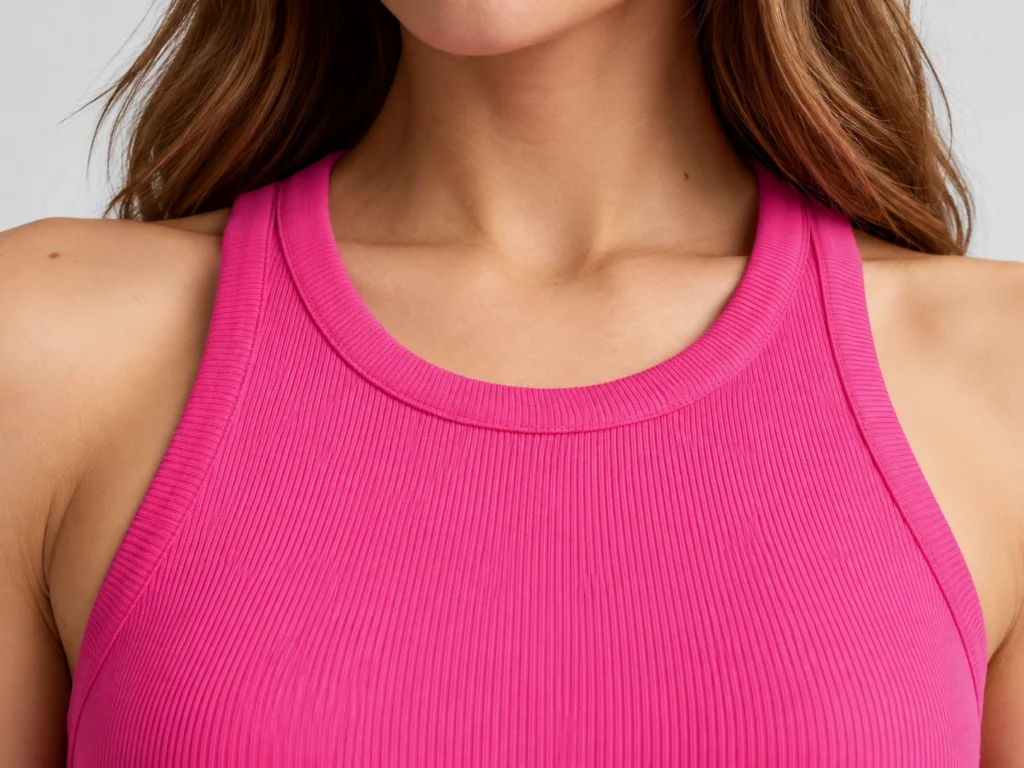
Ribbed Crew Neck & Armhole Binding

Ribbed Crew Neck & Armhole Binding

The sleeveless neckline features a softly rounded crew-neck shape finished with a matching pink band. The shoulder and armhole openings use coordinated fabric binding to create a clean, defined edge. Important construction references include neckline depth, band width, armhole curvature, attachment-stitch accuracy, and balanced tension to prevent stretching or distortion.

Racerback Construction & Curved Back Cutout

Racerback Construction & Curved Back Cutout

The upper back follows a narrow racerback shape, leaving the shoulder blades exposed through curved armhole openings. A separate curved cutout is positioned across the lower back, with matching fabric bands defining the upper and lower edges. Key development requirements include cutout symmetry, edge stability, band tension, and consistent vertical positioning through the size range.

Side Slit & Maxi Hem Construction

Side Slit & Maxi Hem Construction

The maxi-length skirt incorporates a side slit extending upward from the lower hem. The opening provides additional walking ease while maintaining the fitted, elongated appearance of the dress. Slit height, seam reinforcement at the upper opening, clean edge finishing, hem stitching, and left-right panel alignment should follow the approved construction reference.

Material & Finish

Material selection is reviewed together with composition, weight, stretch, recovery and wash response so the approved reference can be translated into repeatable production specifications.

Knit fabric material reference
Fabric texture reference. Color shown is for material reference only.

Material Reference

Composition To be confirmed against the approved rib knit fabric specification.
Fabric Weight To be confirmed in GSM against the approved fabric specification.
Fabric Structure Rib
Stretch Direction 4-Way Stretch
Handfeel Fine-textured rib knit with a soft, flexible handfeel and a lightly structured vertical surface. The intended material supports comfortable body contact, close-fitting drape, and controlled movement through the waist and hip areas. Final softness and elasticity should be confirmed against the approved fabric sample.
Recovery Stretch and recovery properties require confirmation through physical material testing. Particular attention should be given to neckline and armhole stability, body recovery around the waist and hips, and the shape retention of the racerback and curved back-cutout edges. Recovery standards should be established during material approval.

Material Direction

Develop using a fine-gauge rib knit fabric suitable for fitted cut-and-sew dresses. Material selection should support the elongated silhouette, defined vertical rib appearance, racerback construction, and curved lower-back cutout. Key review requirements include fabric weight, stretch direction, recovery, opacity under extension, shrinkage control, color consistency, and dimensional stability before bulk production approval.

Finish / Decoration Direction

The primary design feature combines a racerback upper section with a curved lower-back cutout framed by matching fabric bands. Additional construction details include a clean bound crew neckline, matching bound armholes, a defined side slit, and a stitched bottom hem. Key finishing requirements include symmetrical cutout shaping, balanced band tension, consistent rib alignment, secure slit reinforcement, and controlled seam appearance.

Development Options

This reference style can be used as a development starting point. Changes should be defined as controlled project variables rather than isolated styling edits.

Fit & Proportion

Fit and silhouette: Slim. Garment length: Longline. Review proportions, body ease, measurements and size grading against the approved sample before bulk production.

Material & Performance

Start with the recorded material attributes (fabric structure: Rib; stretch direction: 4-Way Stretch). Confirm composition, fabric weight, handfeel, recovery, shrinkage and wash response through sampling before bulk production.

Construction & Color

Panel placement, seam direction, contrast distribution and construction details can be adjusted while keeping the overall product logic clear and production-ready.

Finish & Brand Integration

Align decoration, labeling and surface finishing with the approved material and construction reference. Intended applications: Casual, Lifestyle. Verify placement, appearance and wash response against approved samples before bulk production.

Customization Notes

Fabric composition, weight, rib spacing, stretch properties, color, silhouette, garment length, neckline dimensions, and armhole shaping can be reviewed for custom development. Additional options include racerback width, lower-back cutout size and curvature, cutout-edge band dimensions, side-slit height, seam finishing, private labeling, and packaging. Final material specifications, fit standards, stretch recovery, and construction details are defined through sampling and approval before bulk production.

Development Checkpoints

Before scale, the style is reviewed through defined references so material, fit, construction and finishing remain aligned from sampling into production.

Material Reference

Confirm composition, fabric structure, weight, handfeel, stretch and recovery against the approved material direction.

Fit & Construction

Review measurements, panel balance, seam placement and construction details against the approved sample and size requirements.

Wash & Performance Review

Check shrinkage, dimensional response, surface appearance and relevant performance requirements before production release.

Approved Production Reference

Align approved sample, material reference, decoration standard and production notes before the style moves into repeatable bulk execution.

Develop This Direction for Your Project

Product applications help define what the garment needs to become. The next step is to bring the available references, material expectations, construction requirements, approval criteria and order plan into one project evaluation.

Already have a product direction, reference sample, or technical brief?

Start a Project Evaluation →

Project evaluation, not an instant quotation.

Scroll to Top