Reference Style KM-TS-005

Oversized Boat-Neck Raw-Edge Striped Jersey Long-Sleeve T-Shirt

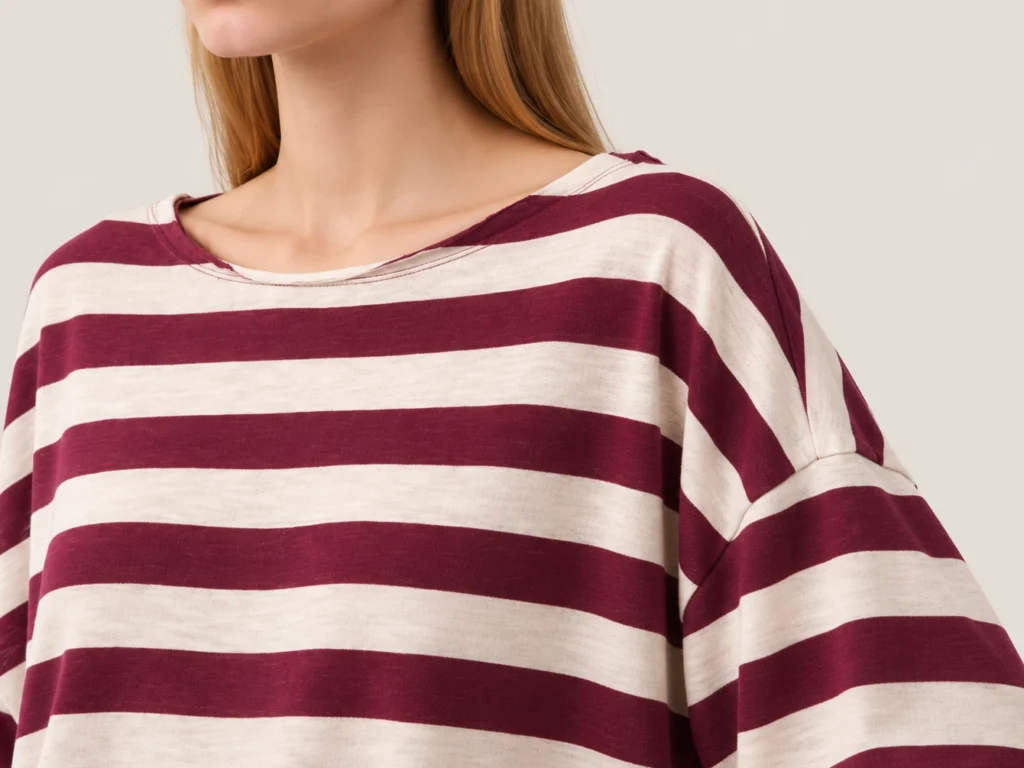
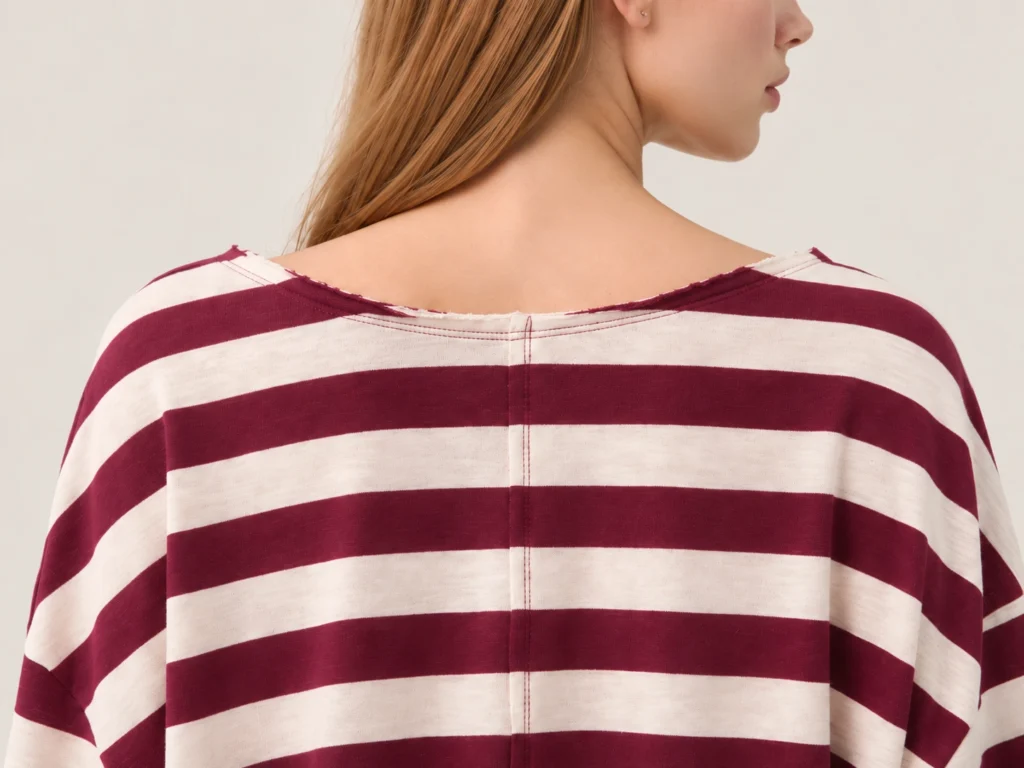
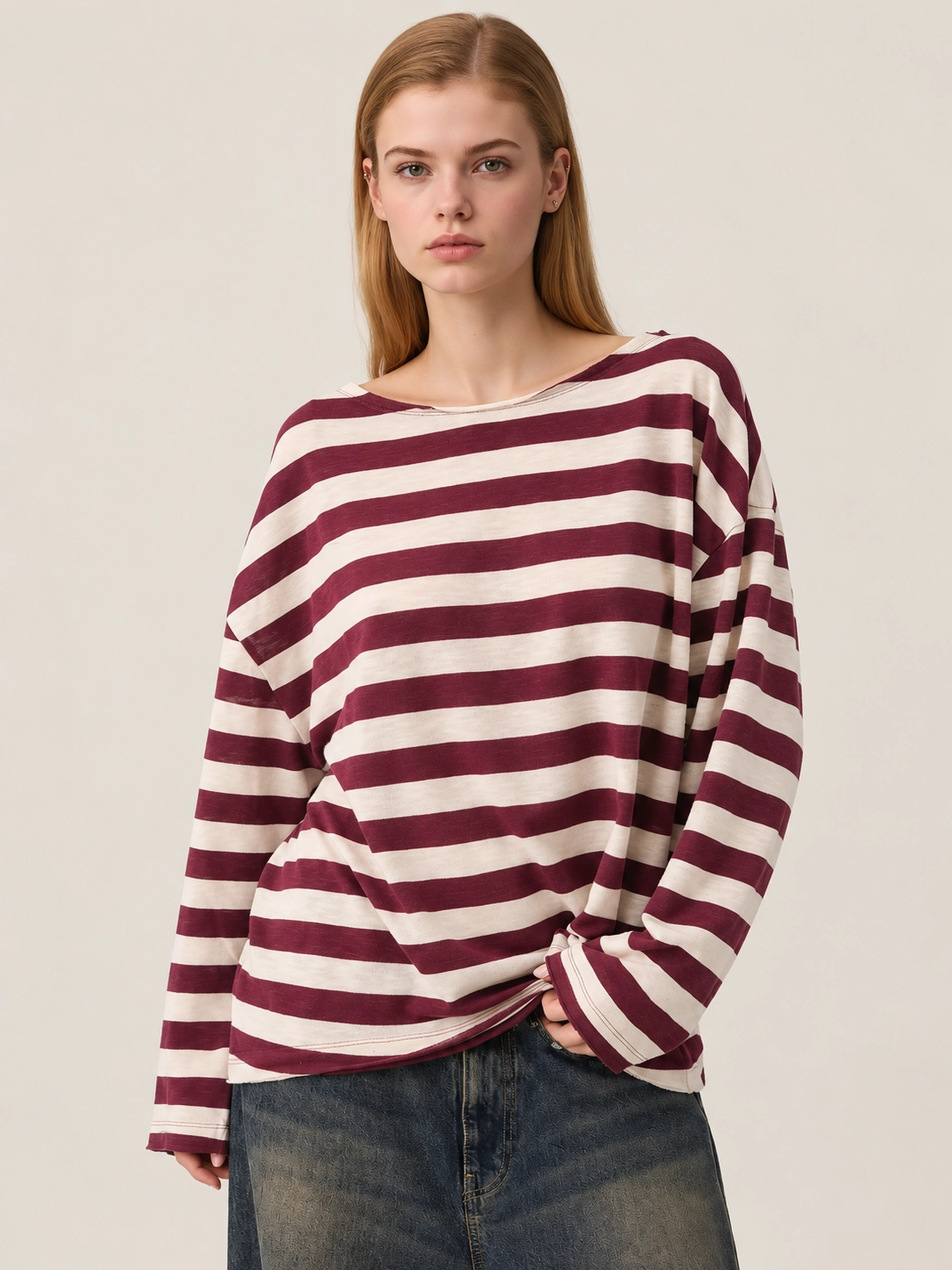
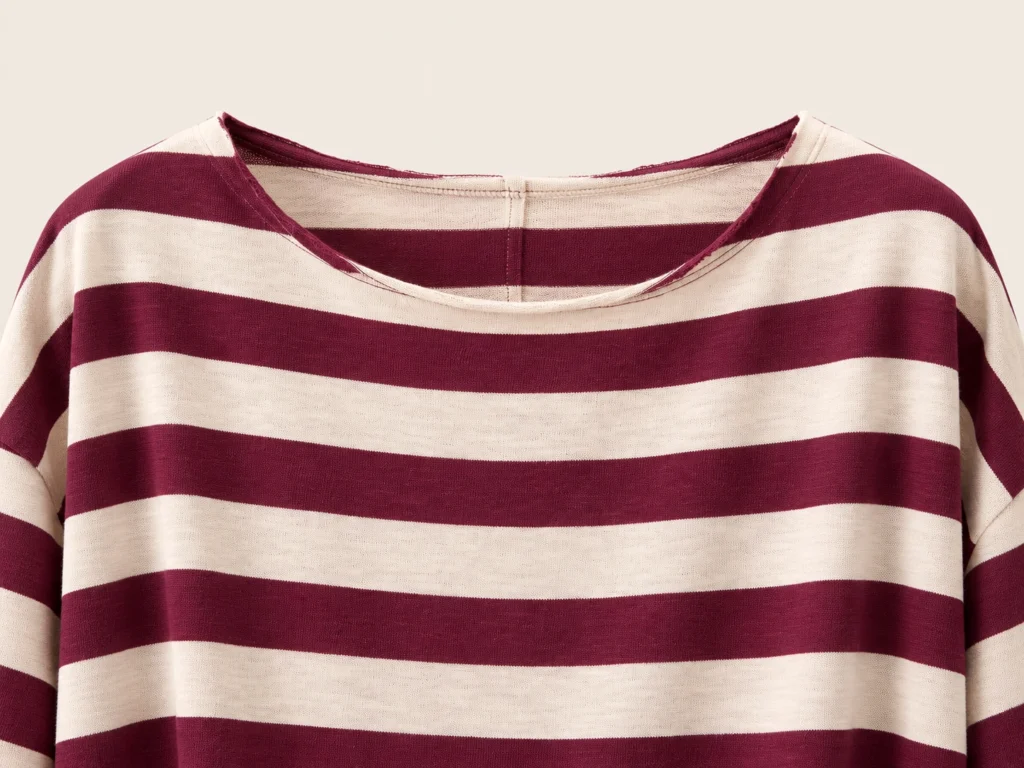
An oversized long-sleeve T-shirt defined by a wide boat neckline, raw-edge neck finish, dropped shoulders, horizontal stripes, and a visible center-back seam. Designed as a relaxed reference for casual and fashion-led knit jersey programs.

Product Type
T-Shirt
Fit & Silhouette
Oversized
Sleeve Construction
Long Sleeve
Garment Length
Regular Length
Fabric Structure
Single Jersey
Use Direction
Casual, Fashion, Lifestyle

Oversized Boat-Neck Raw-Edge Striped Jersey Long-Sleeve T-Shirt

SKU: KM-TS-005 Category:

Product Definition

This reference style is defined by how silhouette, construction and intended use work together before material and production specifications are finalized.

Oversized long-sleeve jersey T-shirt with a wide boat neckline, dropped shoulder construction, generous body volume, and full-length sleeves. The raw-edge neckline and center-back seam create a deliberately relaxed construction character, while the horizontal stripe layout defines the visual direction.

Development Direction

Loose, fluid, and oversized with extended shoulder width and relaxed body volume. Neckline stability, sleeve balance, body drape, and stripe alignment should be reviewed during sampling before production approval.

Material choice, stretch and recovery, seam positioning and fit should be aligned through sampling, wash review, fit verification and pre-production approval before bulk production.
Construction Details

Key construction points are reviewed to align seam placement, proportion and finishing before production.

Raw-Edge Boat Neckline Construction

Raw-Edge Boat Neckline Construction

The wide neckline uses a deliberately exposed raw-edge finish rather than a conventional rib collar. Edge shape, stitch position, opening width, and stability should be controlled during sampling to preserve the relaxed appearance without excessive distortion.

Dropped Shoulder & Long-Sleeve Construction

Dropped Shoulder & Long-Sleeve Construction

The shoulder seam extends beyond the natural shoulder point to create the oversized silhouette. Sleeve volume, shoulder drop, sleeve length, and opening finish should be balanced with the fabric drape to maintain a clean relaxed shape.

Center-Back Seam & Stripe Alignment

Center-Back Seam & Stripe Alignment

A visible center-back seam runs vertically through the garment and intersects the horizontal stripe layout. Stripe matching, seam straightness, and neckline alignment should remain consistent from approved sample through bulk production.

Material & Finish

Material selection is reviewed together with composition, weight, stretch, recovery and wash response so the approved reference can be translated into repeatable production specifications.

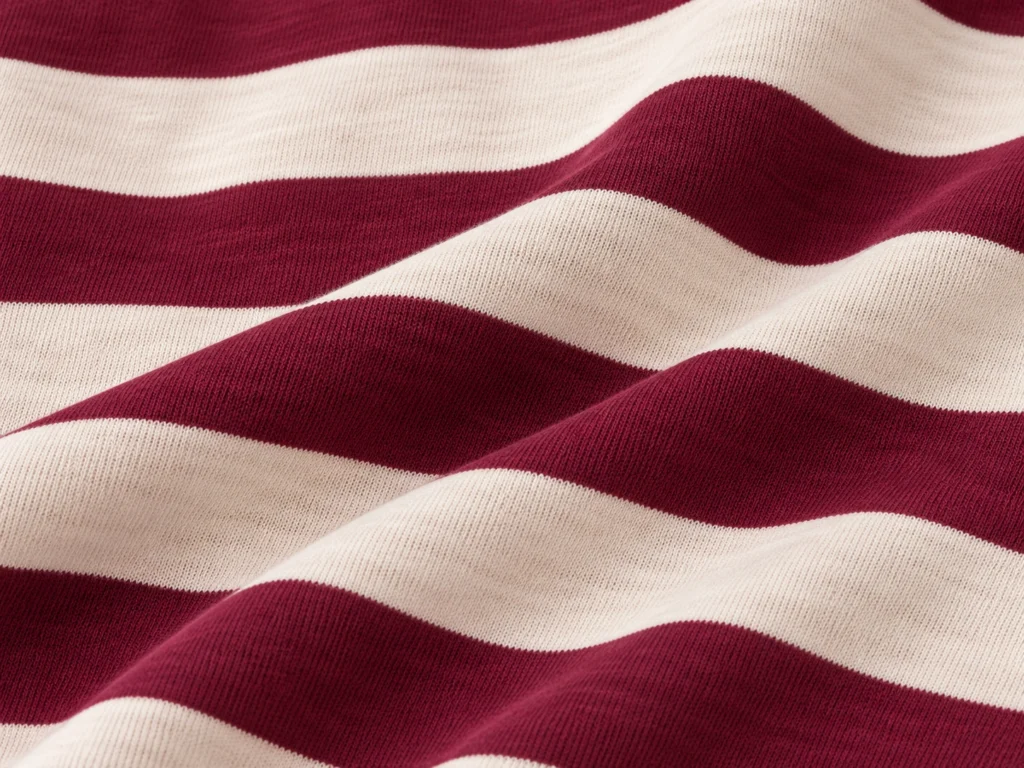
Knit fabric material reference
Fabric texture reference. Color shown is for material reference only.

Material Reference

Composition To be defined during material development.
Fabric Weight Light-to-midweight direction. Final GSM to be confirmed after opacity, drape, handfeel, dimensional stability, and wash review.
Fabric Structure Single Jersey
Stretch Direction 2-Way Stretch
Handfeel Soft, lightweight, and fluid with a relaxed jersey handfeel and natural surface texture.
Recovery Natural jersey stretch with moderate recovery. Neckline shape and garment dimensions should be verified after wear and washing.

Material Direction

Lightweight striped single jersey suitable for oversized silhouettes and fluid drape. Material selection should balance softness, opacity, stripe consistency, shrinkage control, and seam stability.

Finish / Decoration Direction

The stripe layout is the primary visual feature. Additional branding can remain minimal, with small embroidery, print, label, or tonal decoration reviewed according to fabric behavior and stripe placement.

Development Options

This reference style can be used as a development starting point. Changes should be defined as controlled project variables rather than isolated styling edits.

Fit & Proportion

Fit and silhouette: Oversized. Garment length: Regular Length. Review proportions, body ease, measurements and size grading against the approved sample before bulk production.

Material & Performance

Start with the recorded material attributes (fabric structure: Single Jersey; stretch direction: 2-Way Stretch). Confirm composition, fabric weight, handfeel, recovery, shrinkage and wash response through sampling before bulk production.

Construction & Color

Panel placement, seam direction, contrast distribution and construction details can be adjusted while keeping the overall product logic clear and production-ready.

Finish & Brand Integration

Align decoration, labeling and surface finishing with the approved material and construction reference. Intended applications: Casual, Fashion, Lifestyle. Verify placement, appearance and wash response against approved samples before bulk production.

Customization Notes

Fabric composition, GSM, stripe width, stripe color, body width, garment length, neckline opening, raw-edge treatment, shoulder drop, sleeve length, center-back seam construction, labels, and packing can be adjusted after project review and sampling.

Development Checkpoints

Before scale, the style is reviewed through defined references so material, fit, construction and finishing remain aligned from sampling into production.

Material Reference

Confirm composition, fabric structure, weight, handfeel, stretch and recovery against the approved material direction.

Fit & Construction

Review measurements, panel balance, seam placement and construction details against the approved sample and size requirements.

Wash & Performance Review

Check shrinkage, dimensional response, surface appearance and relevant performance requirements before production release.

Approved Production Reference

Align approved sample, material reference, decoration standard and production notes before the style moves into repeatable bulk execution.

Develop This Direction for Your Project

Product applications help define what the garment needs to become. The next step is to bring the available references, material expectations, construction requirements, approval criteria and order plan into one project evaluation.

Already have a product direction, reference sample, or technical brief?

Start a Project Evaluation →

Project evaluation, not an instant quotation.

Scroll to Top