Quick Answer
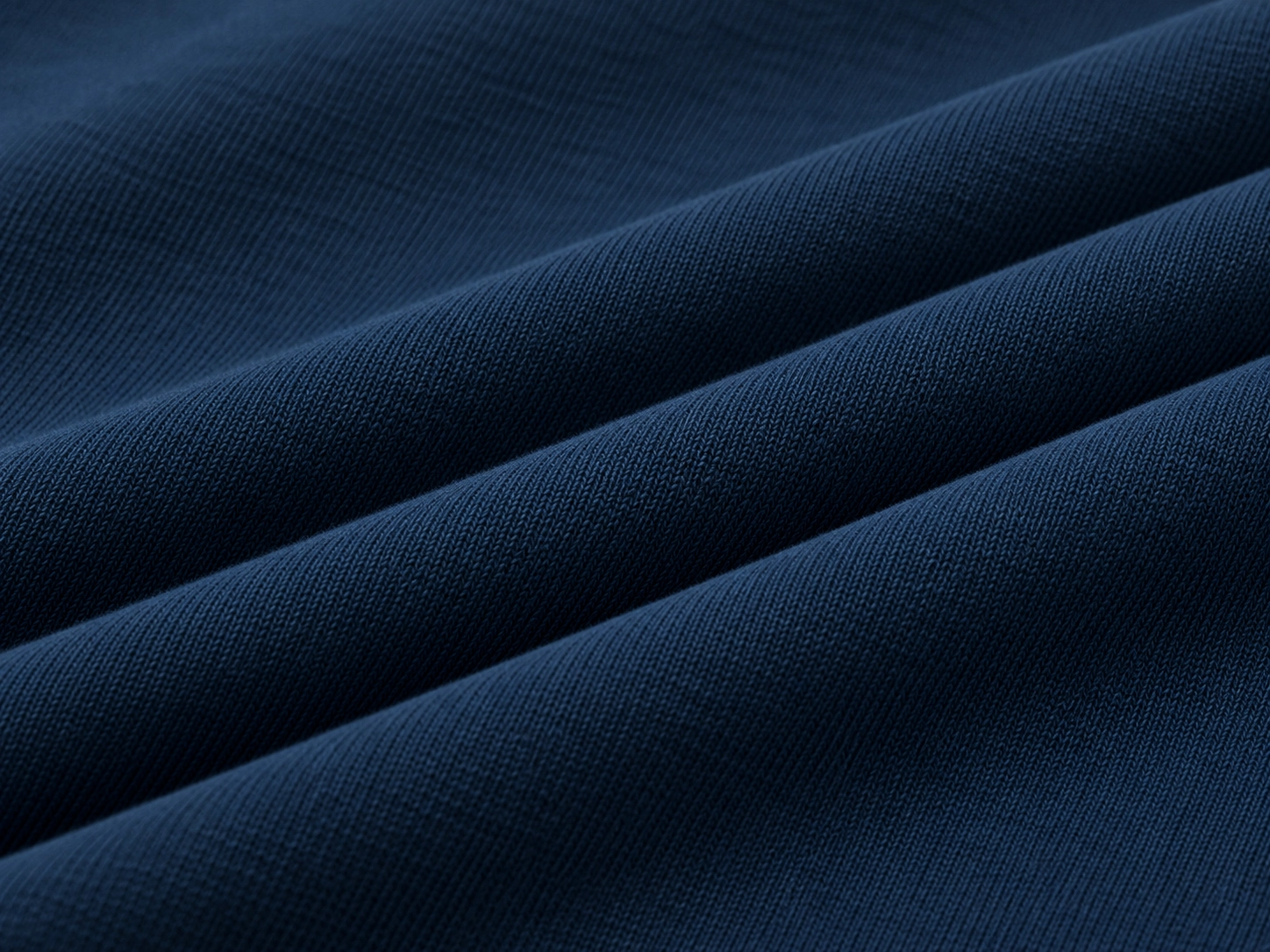
Jersey, interlock, and rib are three common knit fabric types distinguished by their knitted structures rather than fiber composition. Single jersey is commonly used when a relatively fluid, versatile fabric is needed for T-shirts and casual knit garments. Interlock offers a more balanced two-sided construction that can provide a smoother, more substantial feel. Rib has pronounced alternating knit and purl wales and is often chosen where the garment needs to expand and recover around the body, such as neckbands and cuffs. None is automatically the best choice: the final decision depends on the fiber blend, yarn, gauge, fabric weight, finishing, intended silhouette, and verified performance of an actual material reference.
Start With the Garment, Not the Fabric Name
A fabric label by itself cannot tell a development team whether a finished garment will hold its shape, feel comfortable, or remain consistent from a sample to a repeat order. Before comparing fabric structures, define the garment’s role. A relaxed everyday T-shirt, a fitted base layer, a soft knit dress, and a structured polo place different demands on the material.
For a useful selection brief, record the intended product category, fit and drape, required stretch direction, surface character, target handfeel, acceptable opacity, and likely care conditions. Treat a fabric construction as one design variable rather than the complete specification.
What Is Single Jersey?
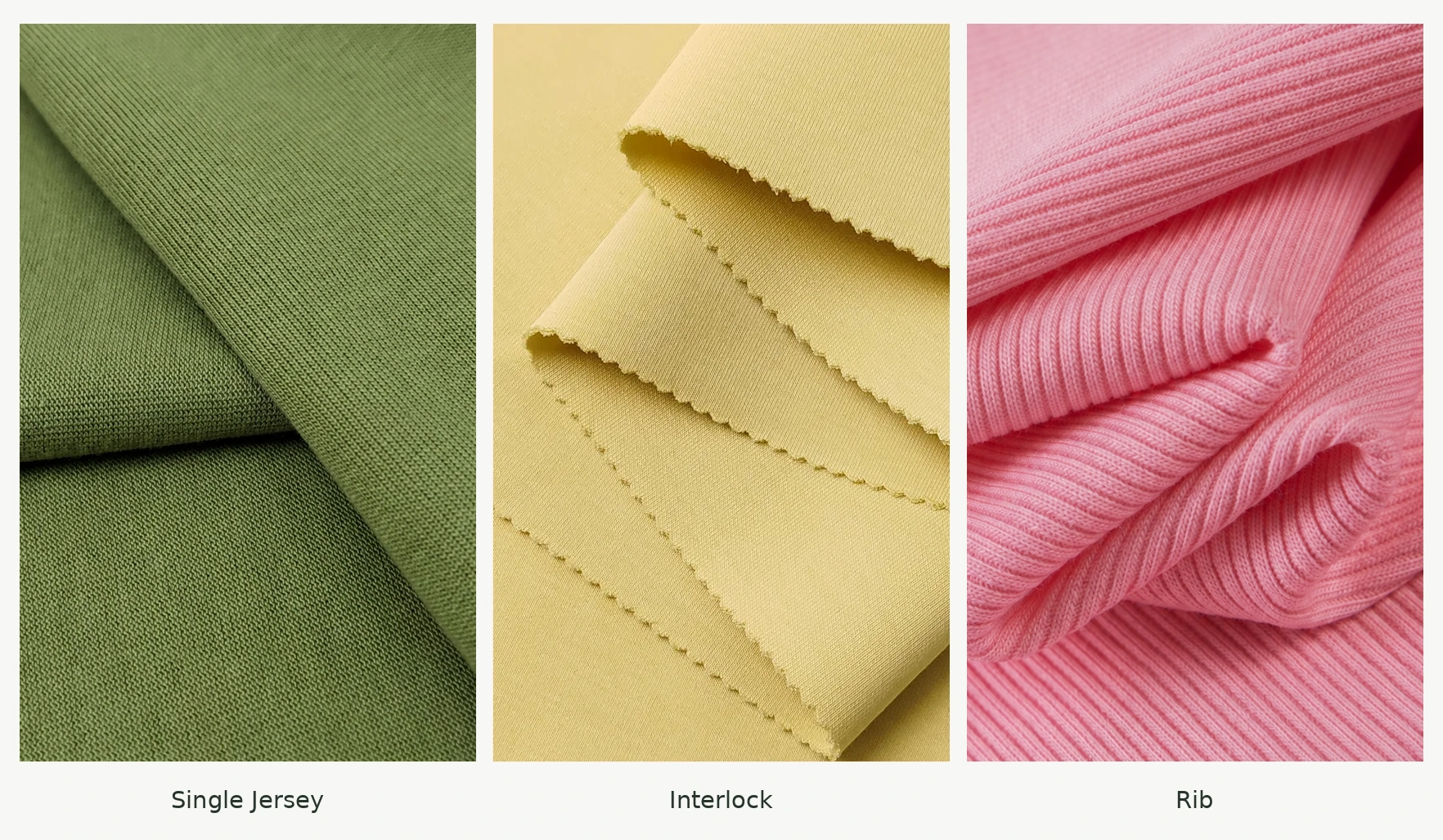
Single jersey is a weft-knit construction with visibly different face and reverse sides. Its surface and drape make it a familiar option for many cut-and-sew T-shirts and other lightweight knit garments. Depending on yarn and finishing, it can feel soft and fluid or relatively firm.
An important practical consideration is edge curling. Some single-jersey fabrics tend to curl at cut edges, which may complicate handling and sewing. The degree depends on the particular fabric and processing conditions; it should be checked on actual swatches, not assumed from the name alone.
Buyer questions: Does the proposed jersey show acceptable opacity and drape at the intended garment length? How does the cut edge behave? Is the stretch and recovery adequate for the neckline, body fit, and washing conditions?
What Is Interlock?
Interlock is a double-knit construction with two intermeshed systems of stitches, generally resulting in similar-looking surfaces on both sides. Compared with a typical single jersey at otherwise similar construction settings, an interlock can feel more compact and provide a different balance of body, stability, and drape. That comparison is directional, not a fixed performance guarantee.
Interlock may suit garments that call for a smooth surface or a little more body, including selected T-shirts, casual tops, and certain knit dresses. But a low-weight interlock and a heavy, tightly constructed jersey can behave very differently. Never approve an interlock substitution based only on the structure name.
Buyer questions: Does the interlock provide the intended silhouette without becoming too stiff? Are thickness, stretch, heat comfort, and post-wash measurements appropriate for the design?
What Is Rib Knit Fabric?
Rib structures use alternating knit and purl stitches to create distinct vertical ribs. Different rib ratios and yarn choices can produce noticeably different stretch, recovery, surface texture, and weight. Rib is often used for neckbands, cuffs, waistbands, fitted tops, and full-garment applications where its texture and extension characteristics are desirable.
However, rib structure alone does not guarantee recovery. A rib made from one fiber and finish may lose its shape differently from another rib that includes elastane or uses a different yarn system. The relationship between a rib trim and its main garment fabric also matters: an unsuitable neckband length or tension can distort an otherwise acceptable T-shirt neckline.
Buyer questions: Is this rib intended as a trim or the main fabric? Does it return to the approved dimension after extension? How does its wash response compare with the body fabric?
Side-by-Side Selection Matrix
| Decision factor | Single jersey | Interlock | Rib |
|---|---|---|---|
| Typical visual cue | Distinct face and reverse | More similar-looking faces | Vertical rib texture |
| Common development roles | T-shirt bodies, casual tops, some dresses | Tops and dresses requiring a different balance of body and smoothness | Neckbands, cuffs, waistbands, fitted garments |
| Edge behavior | Cut-edge curling can occur | Often less edge curl than comparable single jersey, but verify | Depends on specific rib and processing |
| Stretch and recovery | Depends on yarn, construction and finishing | Depends on yarn, construction and finishing | Often good extension across the ribs; recovery must still be tested |
| Selection risk | Curl, opacity, distortion, inconsistent drape | Unexpected stiffness or changed fit | Poor recovery, excessive contraction, unsuitable trim tension |
This is a qualitative buyer guide, not a laboratory comparison. No absolute stretch, shrinkage, GSM, or durability values are implied.
How Composition, GSM, and Finishing Change the Outcome
The same structural category can produce different garment behavior because the fabric is also defined by fiber composition, yarn characteristics, knitting settings, fabric weight, dyeing, and finishing.
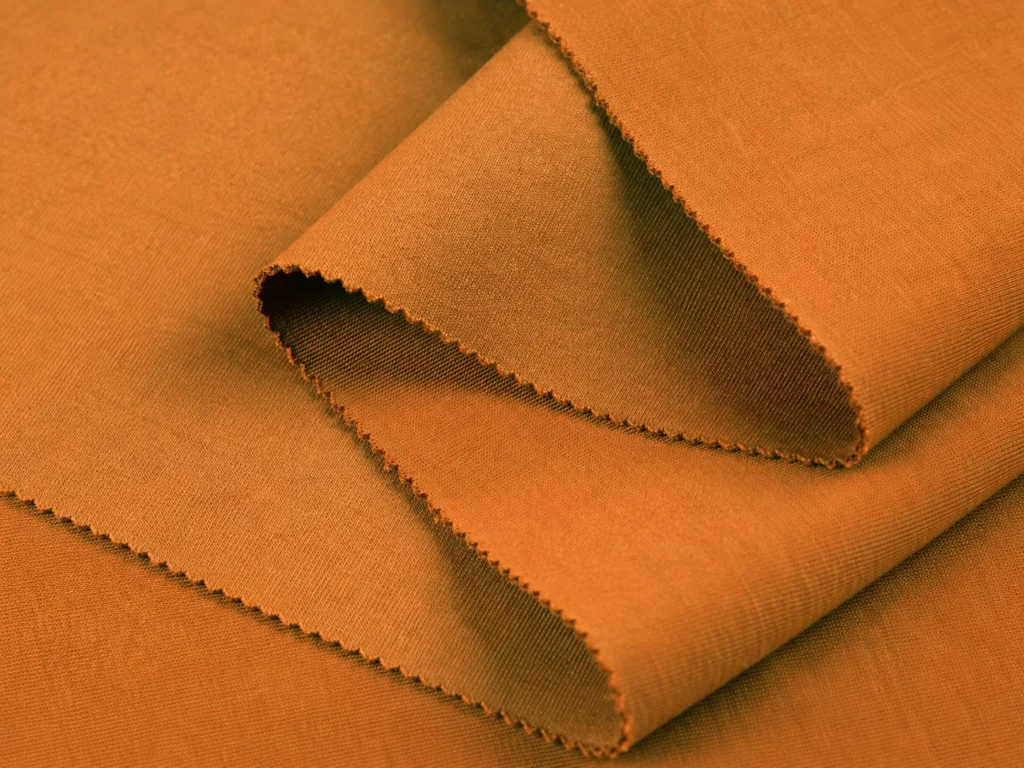
Composition affects the range of possible handfeel, moisture behavior, care performance, and stretch response. GSM reports fabric mass per square meter; it does not independently determine thickness, warmth, opacity, or quality. Finishing can change surface feel, dimensional behavior, and the appearance of a material after washing. Each variable should be assessed together against the garment’s intended use.
For example, replacing one jersey with another at a similar nominal GSM does not necessarily preserve drape or fit. Likewise, selecting a rib with greater apparent stretch does not mean a neckband will retain its dimensions after repeated wear. Specific behavior must be verified with the proposed fabric and an agreed method.
For dimensional stability assessment, AATCC TM135 provides a standardized method for measuring fabric dimensional changes after home laundering. The test method should be selected according to the material and agreed evaluation requirements.
Match the Structure to the Product Decision
Everyday T-shirts: Start with the desired fit and handfeel. Single jersey may be a sensible first reference, while interlock can be compared when a different surface or body is needed. Check neckline compatibility rather than assuming a standard rib trim will work with every body fabric.
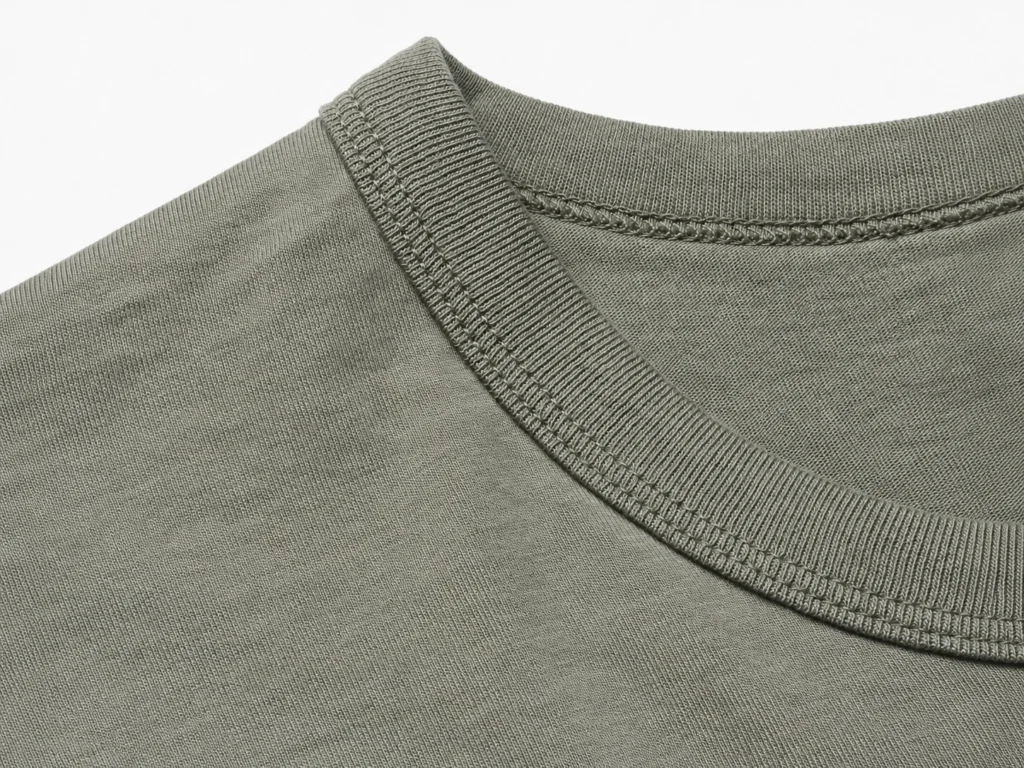
Polo shirts: The body fabric, collar construction, and placket have to work together. Pique may also be a relevant option, but it is a separate structure family and should be evaluated against the intended product character. Jersey or interlock choices should be judged against collar weight, seam behavior, and the approved silhouette.
Knit dresses: Drape, opacity, recovery, and weight can determine whether the fabric supports the intended silhouette. The same fabric may behave differently in a short fitted dress and a longer relaxed dress.
Fitted layers and activewear: Judge stretch direction, recovery under repeated extension, surface behavior, and seam compatibility. Do not assume a knit fabric is suitable for performance garments without evaluating the specific finished-material requirements.
Hoodies and joggers: French terry, fleece, or other suitable knit constructions may be more relevant to many designs than the three structures compared here. The buyer should first define garment purpose, warmth, surface, and bulk before selecting the structure.
What to Request Before Sampling
A development team can reduce avoidable revisions by requesting a small, comparable set of physical references and documenting their differences:
- Swatches of the proposed fabric constructions, clearly identified by supplier reference, composition, nominal GSM, and finishing direction.
- A handfeel and drape review in realistic lighting, with the expected garment silhouette in mind.
- Stretch and recovery observations or test results, including the test conditions and the direction measured where available.
- Dimensional stability information under an agreed care and test method, particularly when the final garment fit is sensitive to shrinkage.
- Construction compatibility checks for neckline, cuff, waistband, seams, and any planned decoration.
- An approved material reference that can be used during sampling and as a comparison point when production begins.
If performance information is missing, record it as an open decision rather than guessing a value. A clear list of unknowns is more useful than an attractive but incomplete swatch card.
A Simple Decision Checklist
Before approving one construction, ask: Does it support the intended silhouette? Have the handfeel and drape been assessed on a real swatch? Is the expected stretch direction appropriate? Does it cooperate with the selected trims and seams? Has post-wash behavior been considered? Is the proposed production material identifiable against the approved reference?
Where the answer is uncertain, a targeted sample review is preferable to treating the fabric name as proof of suitability.
Frequently Asked Questions
Is interlock always thicker than jersey?
No. Although interlock is often described as more substantial than a typical single jersey, actual thickness and weight depend on yarn, machine settings, density, and finishing. Compare the proposed samples, not only the structure names.
Does rib knit always have better recovery?
No. Rib typically offers useful extension characteristics, but its recovery depends on the complete fabric specification and finishing. Test the intended rib in its real trim or garment application.
Is a higher GSM fabric always better quality?
No. GSM measures mass per unit area. Quality and suitability depend on how the material performs against the garment specification, including drape, stability, comfort, surface and care requirements.
Can a jersey garment be changed to interlock without changing the pattern?
Not safely by assumption. The change can alter thickness, drape, stretch, seam behavior, and fit. Evaluate the replacement fabric and review the pattern and sample before approving production.
What is the most useful fabric information to send before sampling?
A reference swatch or identified fabric specification, intended garment use, target handfeel, silhouette, nominal weight range where known, and any stretch or care requirements. Unknown items can be listed for development review.
From Fabric Choice to an Approved Reference
A sound material decision should lead to an identifiable reference that connects the chosen construction with the garment’s pattern, seams, trims, finishing, and review criteria. That reduces the risk of approving a sample that cannot be reproduced consistently during later orders.
To understand how fabric requirements are translated into a development reference, explore Fabric Development & Material Definition. For a product-specific view, see Knit T-Shirts. If you already have fabric swatches, design sketches, or a sample to assess, Share Your Project for Review.