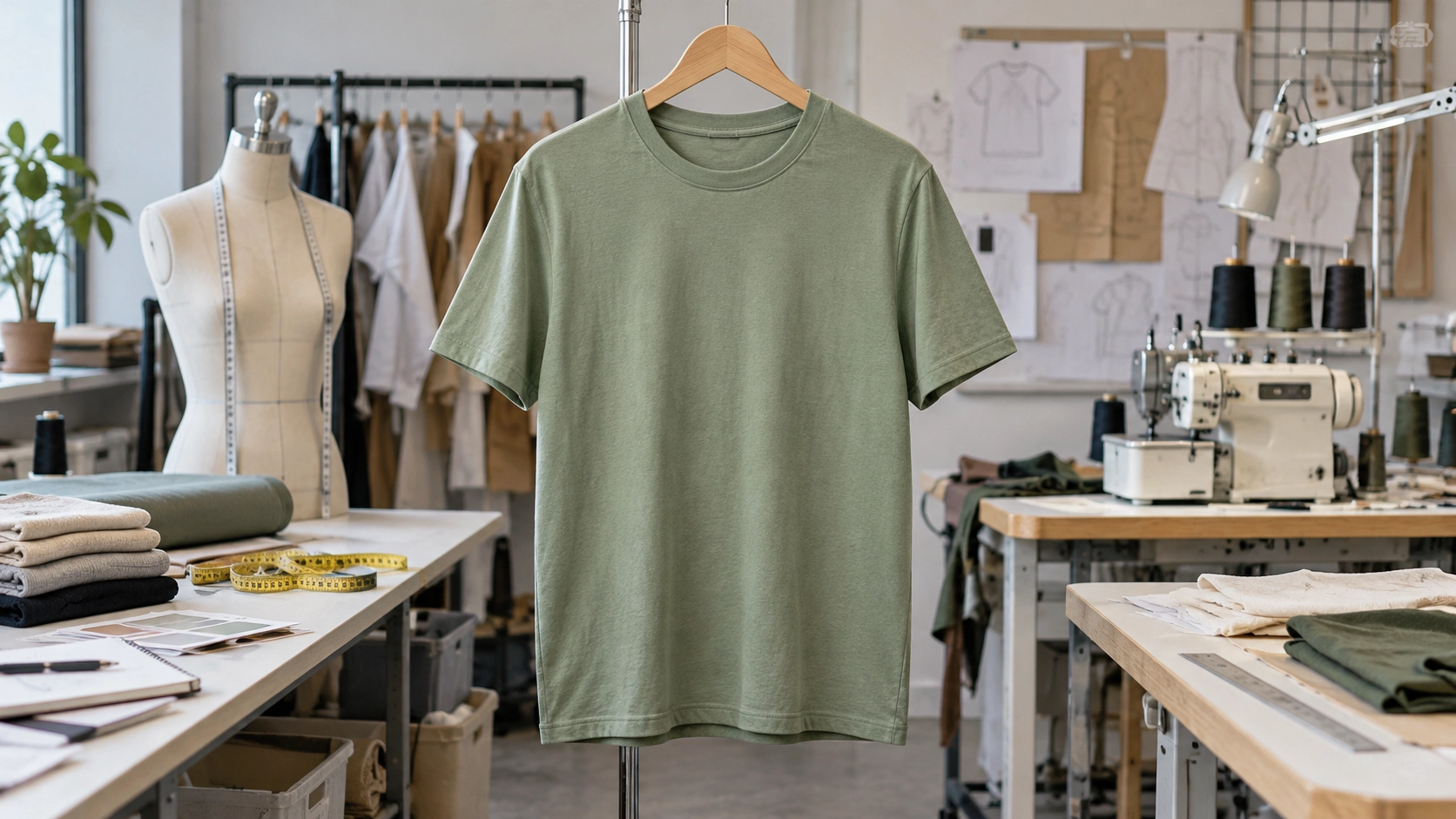
Quick Answer
Knit T-shirt construction problems often arise from the interaction of fabric behavior, pattern geometry, cutting, seam assembly, and finishing. Common warning signs include a wavy neckline, puckered seams, twisted side seams, uneven hems, and distorted shape after washing. These symptoms do not prove a single root cause. A useful corrective process starts with the approved garment and fabric references, isolates the affected operation, tests a specific change on a sample, and checks whether the improvement can be repeated under production conditions.
Why a Knit T-Shirt Can Fail Even When the Fabric Looks Suitable
A T-shirt may appear simple, but its construction combines elastic material with multiple stitched and bound edges. Fabric extension can change during spreading, cutting and feeding. A seam can restrain a flexible panel or introduce unwanted tension. A neckband made from a different knit structure can behave differently from the body fabric. These effects become particularly visible on plain jersey, where the garment silhouette offers little to hide inconsistent handling.
Buyers should distinguish material suitability from assembly quality. A fabric sample that feels comfortable does not establish that the selected stitches, seam allowance, cutting orientation, and attachment conditions will yield a stable finished T-shirt. Conversely, a visible problem does not automatically indicate defective fabric; the garment should be reviewed as an assembled system.
Five Construction Problems Worth Checking
| Visible symptom | Possible contributing factors | What to review first |
|---|---|---|
| Wavy or distorted neckline | Neckband length or recovery mismatch, attachment tension, neck opening geometry | Approved neckline shape, rib reference, sewn sample after relaxation |
| Puckered or rippled seams | Uneven feeding, thread or seam tension, fabric handling, seam specification | Seam sample, panel behavior, stitch and feed setup |
| Twisted side seams | Fabric spirality, grain alignment, cutting orientation, panel balance, finishing | Fabric reference, cut-panel alignment, measurements before and after care |
| Uneven or flared hem | Stretch during hemming, feed imbalance, hem allowance and edge behavior | Hem construction, seam allowance, finished sample after relaxation |
| Shape change after washing | Material dimensional response, trimming mismatch, finishing and care conditions | Agreed wash procedure, before/after dimensions, assembled garment |
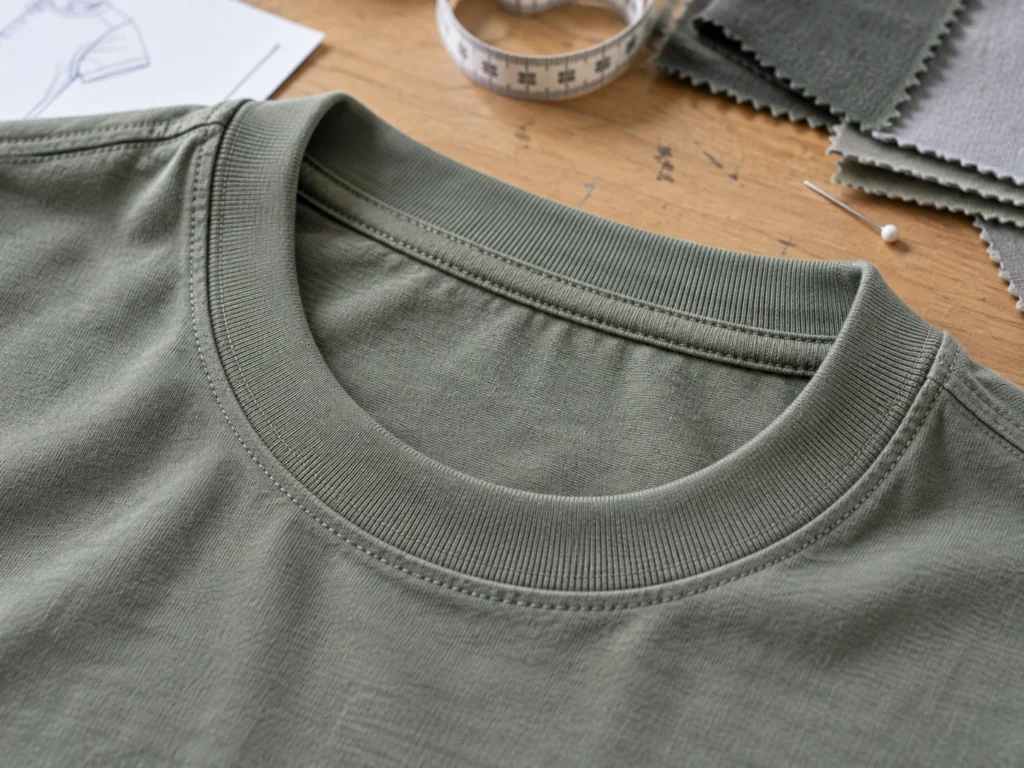
1. Wavy Neckline or Neckband That Does Not Sit Flat
The neckline is not controlled by rib stretch alone. Opening shape, the ratio between band and opening, band recovery, joining method and handling tension all matter. An overly long band may stand away from the body; an unsuitable short band or uneven attachment can pull the opening into distortion. The correct proportions cannot be reduced to a universal neckband percentage because fabric recovery and garment geometry vary.
Compare the approved neckline shape with an assembled sample. Record the body-fabric reference, neckband material, attachment method and observed response after relaxation and agreed care. When necessary, trial alternative band lengths or construction details one variable at a time before approval.
2. Puckering and Wavy Seams
A seam that appears flat while held may ripple after the garment is laid down. Differential feeding, fabric stretching under the presser foot, thread tension, seam elasticity and edge preparation can contribute. The appropriate adjustment depends on the exact knit construction and seam operation. It is not sound to prescribe a single stitch density or machine setting for all jersey fabrics.
Review seam samples in a relaxed state, then assess gentle extension and recovery where relevant. Compare the same fabric and joining construction across trial settings. The evidence should be the resulting seam behavior, not merely the machine setting recorded on a production sheet.
3. Side-Seam Twisting or an Off-Center Garment
A side seam may rotate toward the front or back because of fabric spirality, panel alignment, cutting direction, relaxation or finishing response. Pattern imbalance is another possibility. The visual symptom alone does not identify which cause is dominant. Check both the flat fabric and the completed garment, preferably before and after the defined care process, rather than automatically redrawing the pattern.
For bulk readiness, confirm how the material is oriented during cutting, whether panel alignment matches the approved reference, and what deviation is acceptable under the project specification. Where the textile itself exhibits torque or spirality, cutting and sewing changes may not eliminate that material behavior.
4. Uneven, Flared or Rippling Hems
Jersey edges can curl or extend when handled. Hem appearance also depends on turn-up depth, attachment method, fabric weight and the interaction between the stitch and the folded layers. A hem that stretches during sewing may remain wavy after relaxation. Trial the actual construction on the proposed fabric and assess the garment on a flat surface and during wear.
5. Fit and Shape Changes After Washing
Finished dimensions may change after laundering because the knit fabric, rib trims and seam assemblies do not always respond identically. A T-shirt may shorten, widen, twist, or develop a changed neckline even if its first fitting was satisfactory. Define a care procedure, baseline measurement points and post-care review conditions before drawing conclusions.
How to Separate Fabric, Pattern and Sewing Causes
The fastest-looking correction is not always the most durable one. Recutting a pattern to counter a temporary handling issue may create another problem; changing stitch settings cannot compensate for every material limitation. Treat each visible symptom as a hypothesis to test, and keep a clear record of the change made.
| Assessment stage | Evidence needed | Decision to make |
|---|---|---|
| Material reference | Construction, composition, finish, directional stretch and care response | Is the approved fabric itself suitable and stable for this T-shirt? |
| Cut panels | Grain or orientation, dimensional consistency and visible distortion | Was the garment cut according to the approved pattern and material direction? |
| Sewing trial | Seam samples, neckband construction, hem behavior and relaxed appearance | Which assembly variable should be adjusted and retested? |
| Finished sample | Measurements, fit appearance, movement and care review | Does the corrected T-shirt match the agreed acceptance basis? |
A Practical Pre-Production Review Sequence
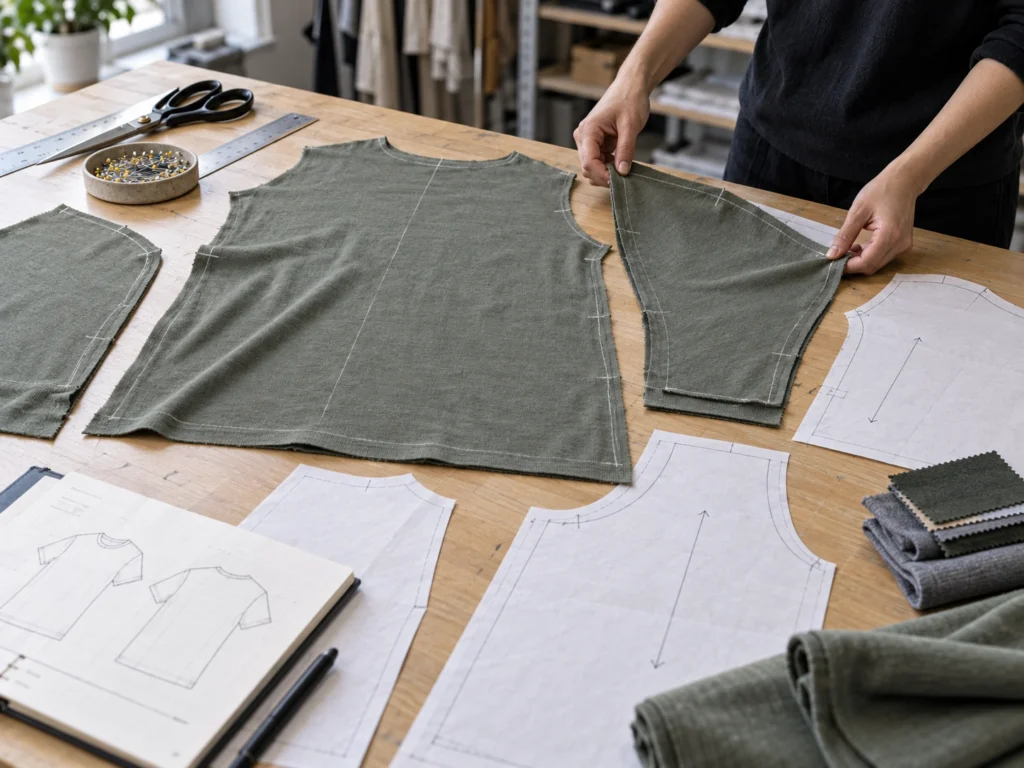
Start with the intended result. Identify the approved silhouette, size, neckline shape, garment measurements and material reference. List the exact defect observed rather than using a general term such as “bad sewing.” Photograph the affected area with the garment relaxed, then record whether the issue occurred during sampling, after handling or after care.
Change one relevant variable at a time. For a neckline issue, compare the band and opening before adjusting general body dimensions. For twisting, examine fabric behavior and cutting orientation before changing side-seam shape. For puckering, review the relevant seam operation and test a controlled alternative. When several factors are suspected, document the trial order so the result can be interpreted.
Recheck as a whole garment. A cleaner seam sample is helpful but does not establish that the complete T-shirt has the correct fit, appearance or wash response. Verify the corrected sample against the agreed criteria and retain it alongside the documented settings and material references.
What Apparel Buyers Should Specify Before Bulk Production
A useful construction brief is more than a list of generic defects to avoid. Provide the garment reference, intended fit and fabric direction, approved material or swatch, size range, key points of measure, relevant seam and trim decisions, decoration placement where applicable, and care expectations. Mark any unresolved questions rather than presenting assumptions as specifications.
The development team can then identify which issues require a fabric decision, a pattern correction, a sewing trial or a combined review. This follows the same principle as choosing jersey, interlock or rib by intended application: structure and garment requirements must be evaluated together.
For the relationship between construction and fit, also refer to How Knit Fabric Behavior Affects Garment Fit and Pattern Development. When construction revisions are agreed, the sample approval process should preserve the material, pattern and workmanship reference used for later production comparison.
Buyer Checklist: Before Approving a Knit T-Shirt
- Is the body fabric identified by a specific approved material reference?
- Have neckline opening and neckband construction been reviewed together?
- Are side seams and hems visually stable in the relaxed garment?
- Have sewing trials been checked on the actual proposed fabric?
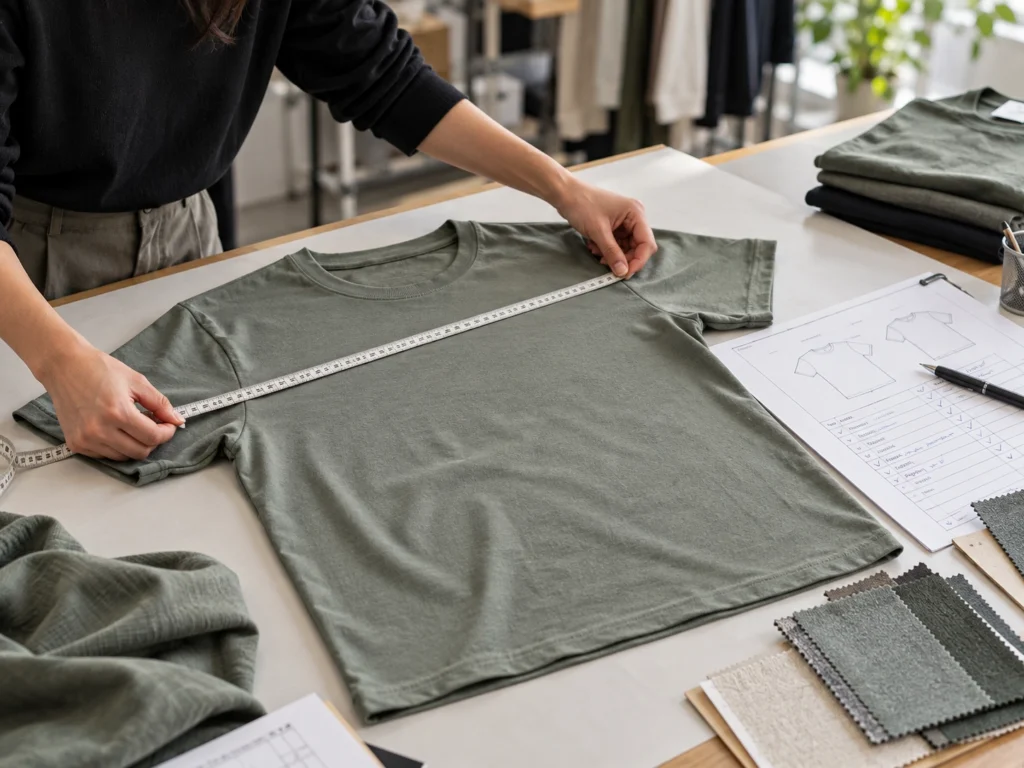
- Is the finished garment measured against the agreed specification?
- Have relevant movement and care responses been reviewed?
- Are deviations, revisions and the approved sample version recorded?
- Can the accepted construction be repeated in production and compared on reorders?
FAQ
Why does a knit T-shirt neckline become wavy?
Possible causes include neckband recovery and length, attachment tension, neckline geometry and handling. Review the complete sewn neckline and its material references before deciding on a correction.
Can sewing adjustments fix a twisted side seam?
Sometimes handling or cutting corrections help, but twisting may also originate in fabric spirality or finishing response. The fabric and finished garment should both be checked.
Does a heavier jersey prevent seam puckering?
No. GSM alone does not establish seam stability. Construction, stretch, feeding, stitch selection and finishing also influence the outcome.
Should a T-shirt sample be checked after washing?
Where care response is relevant to the project, yes. Agree the method and measurement points so the review can distinguish ordinary dimensional response from an unacceptable change.
What should be approved before repeating a knit T-shirt order?
Retain the agreed fabric and trim references, pattern version, finished measurements, seam details, care-review findings and accepted sample, together with any agreed exceptions.
From a Corrected Sample to a Repeatable Construction Reference
The objective is not to make one sample look perfect under one set of conditions. It is to establish a garment construction reference that buyers and production teams can identify, evaluate and reproduce. Once the T-shirt design, fabric, pattern and sewing requirements are aligned, differences in later batches can be assessed against that same defined basis rather than resolved from memory.
For projects that already have a reference T-shirt, material swatches or a technical brief, the next step is a structured review through Start a Project rather than an instant quotation request.