Quick Answer
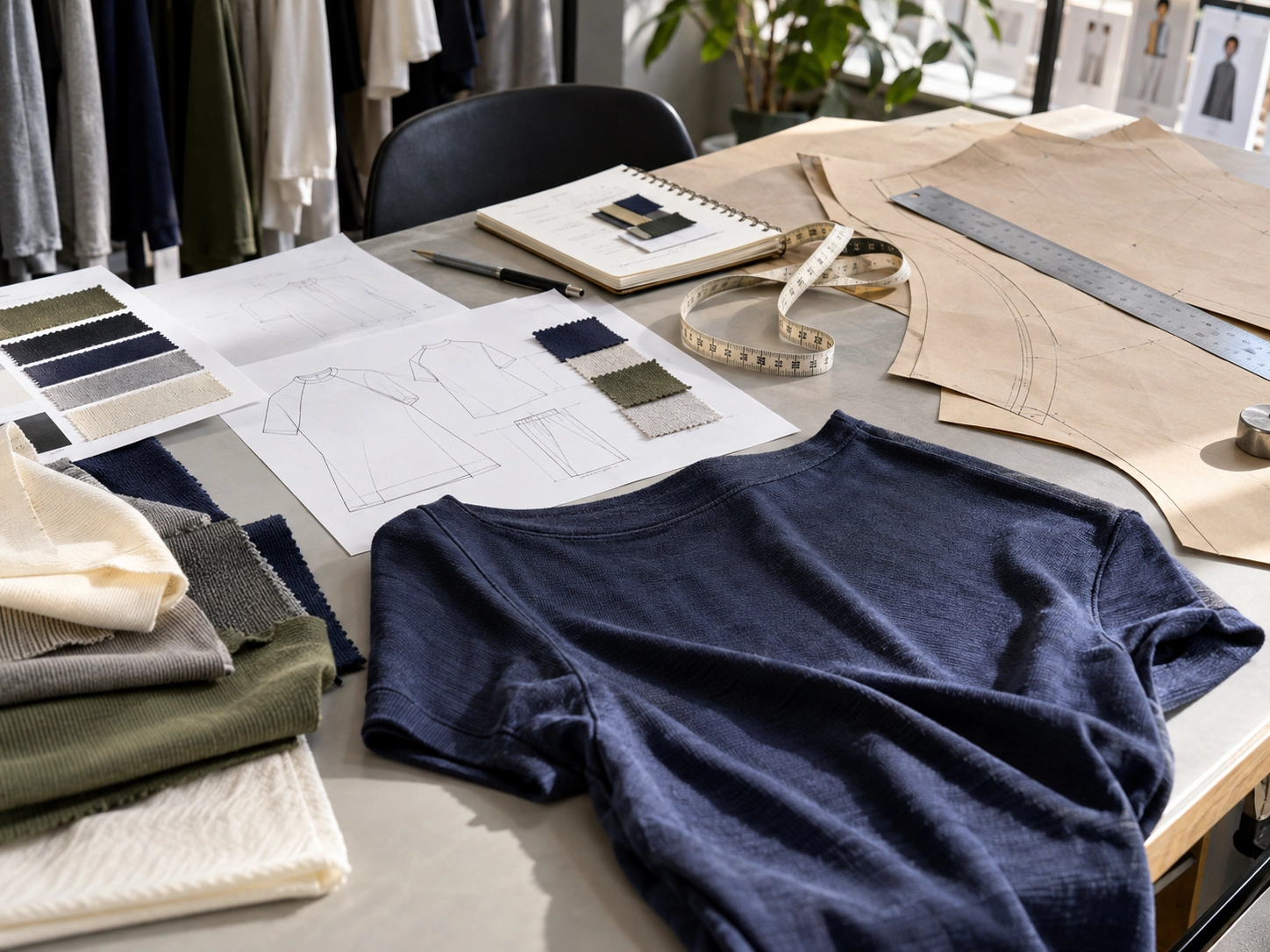
Knit fabric behavior directly affects garment fit and pattern development. A pattern approved with one material may not produce the same silhouette when the fabric changes. Stretch direction, recovery, drape, weight, and dimensional response influence ease, balance, neckline stability, seam appearance, and the way a garment moves on the body. For cut-and-sew knit apparel, the safer decision is to evaluate a defined fabric and a specific pattern together, validate the combination through a fit sample, and retain an identifiable production reference.
Fit Is the Result of Material, Pattern, and Construction Working Together
A size chart defines intended garment measurements, but measurements alone cannot describe how a garment will wear. Two knit tops can share the same finished chest and body length yet look and feel different because one material falls softly while the other holds a firmer outline. One may recover after movement; another may retain distortion at the elbows or neckline. A successful sample therefore reflects a particular combination of material behavior, pattern geometry, seam construction, finishing, and evaluation conditions.
This matters to brands developing T-shirts, polo shirts, dresses, fitted activewear, sweatshirts, or knit pants. The decision is not simply whether a fabric is “stretchy.” Buyers and development teams need to know where the garment must extend, where it should remain stable, how it should drape, and whether the intended shape survives normal movement and agreed care conditions.
Four Fabric Behaviors That Change Garment Fit
| Fabric behavior | Effect on the garment | Fit review question |
|---|---|---|
| Directional stretch | Changes how panels move around the body and where ease is needed. | Does the fabric extend in the directions required by the pattern and wearing movement? |
| Recovery | Influences shape retention at necklines, elbows, knees, and waistbands. | Does the garment return toward its intended shape after repeated movement? |
| Drape and fabric weight | Influence silhouette, fold formation, opacity, and the apparent volume of a garment. | Does the fabric fall as expected at the approved garment length and panel shape? |
| Dimensional response to care | Can affect width, length, twisting, and the relationship between joined panels. | Will the approved fit remain acceptable after the specified care procedure? |
Stretch Direction Changes How Ease Should Be Evaluated
Knit constructions can extend differently across and along the fabric. This does not mean all knitted fabrics are suitable for the same fitted pattern. A close-fitting top, for example, may depend on controlled extension across the chest, while a relaxed everyday T-shirt relies more on shape, drape, and comfortable movement. The pattern must be assessed against the actual material and its intended orientation during cutting.
Stretch measured on a loose swatch is only one part of the decision. Seams, bindings, hems, and decoration can limit extension in the finished garment. If the same design uses different knit constructions for body panels and trims, their interaction must be assessed rather than treating each swatch as an isolated component.
Recovery Matters Even When the Initial Fit Looks Correct
A garment may fit well at the first try-on but lose definition after movement. Neckbands can relax, knees can bag, and waist areas can lose restraint if the combined material and construction do not recover adequately for the application. Recovery should therefore be evaluated after relevant movement or under a defined review method rather than inferred from how far the fabric can be pulled by hand.
Drape and Weight Influence Silhouette
Weight expressed in GSM is useful for material identification but does not independently predict stiffness or drape. Yarn, knit construction, fiber composition, finishing, and the arrangement of a garment all affect how a panel hangs. A soft knit dress may need a different pattern balance from a more structured polo shirt, even if their fabrics have similar nominal weight.
Why a Fabric Substitution Can Invalidate an Approved Fit
Suppose a brand approves a knit T-shirt in one jersey fabric and then requests a replacement with a smoother interlock. Matching composition or GSM does not demonstrate that the original pattern will still produce the approved silhouette. The new material may change stretch, drape, recovery, bulk at seams, and finished measurements after processing.
That does not mean every material change requires a complete pattern redesign. It means a substitution should trigger a documented comparison: review the intended garment behavior, compare the proposed swatches, make a targeted sample where needed, and approve or reject the resulting fit before treating the substitute as production-ready.
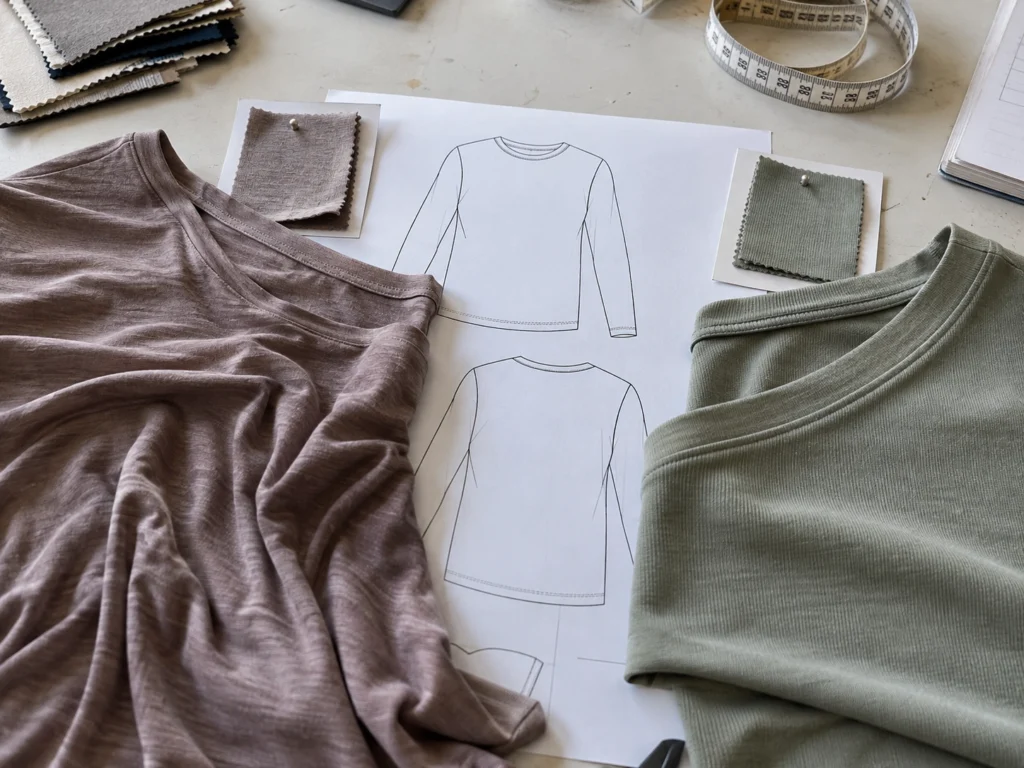
When evaluating a material substitution, record what changed and what did not. A new fabric should not inherit the previous fabric’s approved test results or fit status without verification.
Pattern and Seam Construction Must Be Reviewed Together
Necklines and Rib Trims
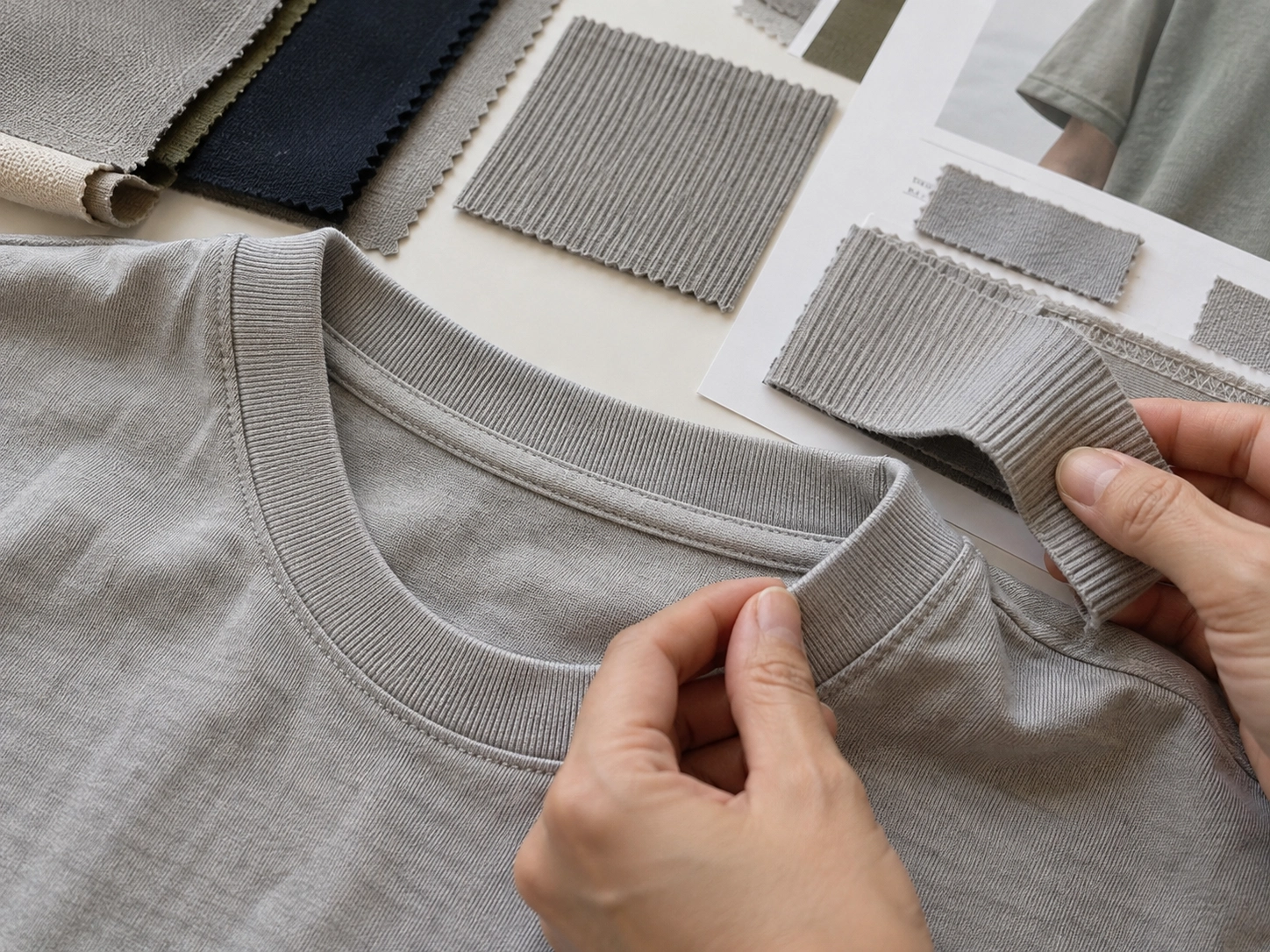
Neckline appearance depends on neck opening geometry, the rib or binding material, trim length, attachment tension, and recovery. A rib that stretches well in isolation can still produce rippling or a distorted opening if its dimensions or assembly conditions are unsuitable. Evaluate the neckline on the assembled garment, including how it sits after handling and care.
Shoulders and Side Seams
Shoulder line placement and the balance between front and back panels influence how a knit top hangs. Side seams may twist or shift if material behavior, cutting orientation, finishing, or pattern balance is not controlled. Do not assume every twisting problem can be corrected through a pattern change alone; first check the material and process variables.
Waistbands, Cuffs, and Hems
These areas often join fabrics that perform different functions. A waistband may need controlled extension and secure recovery, while a body panel may prioritize comfort or drape. Review joining seams, differential stretch, and changes after laundering. A good individual swatch is not sufficient evidence that two materials will behave well when sewn together.
What to Check During a Knit Garment Fit Sample Review
A fit review should distinguish three types of information: objective measurements, visual and wearing observations, and material or care-related behavior. Each answers a different question. A garment can meet a measurement specification while failing the intended appearance, or it can look acceptable in a static photograph while restricting movement.
| Review area | What to inspect | Evidence to retain |
|---|---|---|
| Finished measurements | Key points of measure against the agreed specification. | Measured values, sample size, and method. |
| Appearance on body or form | Silhouette, balance, neckline, shoulders, hem, and intended drape. | Consistent fit photographs and review comments. |
| Movement and recovery | Comfort, restriction, seam response, and shape after movement. | Defined movement observations and any relevant test references. |
| Material and seam interaction | Rippling, twisting, bulking, or mismatch between trims and panels. | Detail images and construction comments. |
| Response after care | Dimensional change, appearance, and any distortion after agreed care. | Care method, pre/post measurements, and findings. |
Do not invent a universal measurement tolerance or acceptable recovery percentage. These depend on the product, material, method, brand standard, and approved technical specification. Where performance testing is needed, report the method and conditions alongside the results.
What to Lock Before Approving a Production Reference
An approved sample should be an identifiable decision reference, not merely a photograph of a garment that looked good once. Confirm the fabric identity and finishing state; pattern and size version; key measurements; seam and trim construction; review findings; and any agreed exceptions. If the material changes later, record whether the original approval still applies or needs reassessment.
For repeat orders, it is especially important to connect the accepted garment to its fabric reference and documented production requirements. The goal is repeatability before scalability: a successful sample must be supported by controls that can be checked again, not treated as a guarantee of future consistency.

Buyer Checklist: Before Releasing a Knit Garment Pattern
- Is the intended garment silhouette and size range clearly defined?
- Is the pattern linked to a specific fabric construction, composition, and finished reference?
- Have stretch direction, recovery, drape, and care response been considered for this application?
- Have neckbands, seams, waistbands, cuffs, and hems been assessed as assembled components?
- Are finished measurements and wearing observations both documented?
- Are sample revisions and open issues resolved before the production reference is approved?
- Is there a clear rule for reassessing fit when the fabric or finishing changes?
FAQ
Can the same knit garment pattern be used with a different fabric?
Possibly, but it should not be assumed. Compare the replacement fabric’s stretch, recovery, drape, weight, and dimensional response, then assess whether a new fit sample or pattern adjustment is required.
Does higher stretch always require less ease?
No. Ease decisions depend on the garment’s intended fit, coverage, support, movement, and the specific material. Stretch alone does not define the right pattern dimensions.
Why can a knit neckline look distorted even when body measurements are correct?
Neck opening geometry, rib length, elastic recovery, attachment tension, and sewing conditions can all affect the finished neckline. Evaluate the assembled neckline rather than relying on body measurements alone.
Should garment fit be checked after washing?
Where care response can affect the intended fit, yes. Confirm the appropriate washing and drying conditions and compare key measurements and appearance before and after care.
What is needed to approve a knit garment fit sample?
A clearly identified sample version, associated fabric and pattern references, agreed measurements, fit observations, relevant performance findings, and recorded decisions on any remaining deviations.
From Fit Sample to Approved Production Reference
Material structure and weight decisions form part of the same development process. See Jersey vs. Interlock vs. Rib for construction differences and Fabric GSM Explained for the limits of weight-based comparisons. For a new project, align the fabric reference, intended silhouette, pattern version, and review criteria before treating the sample as ready for bulk preparation.