Quick Answer
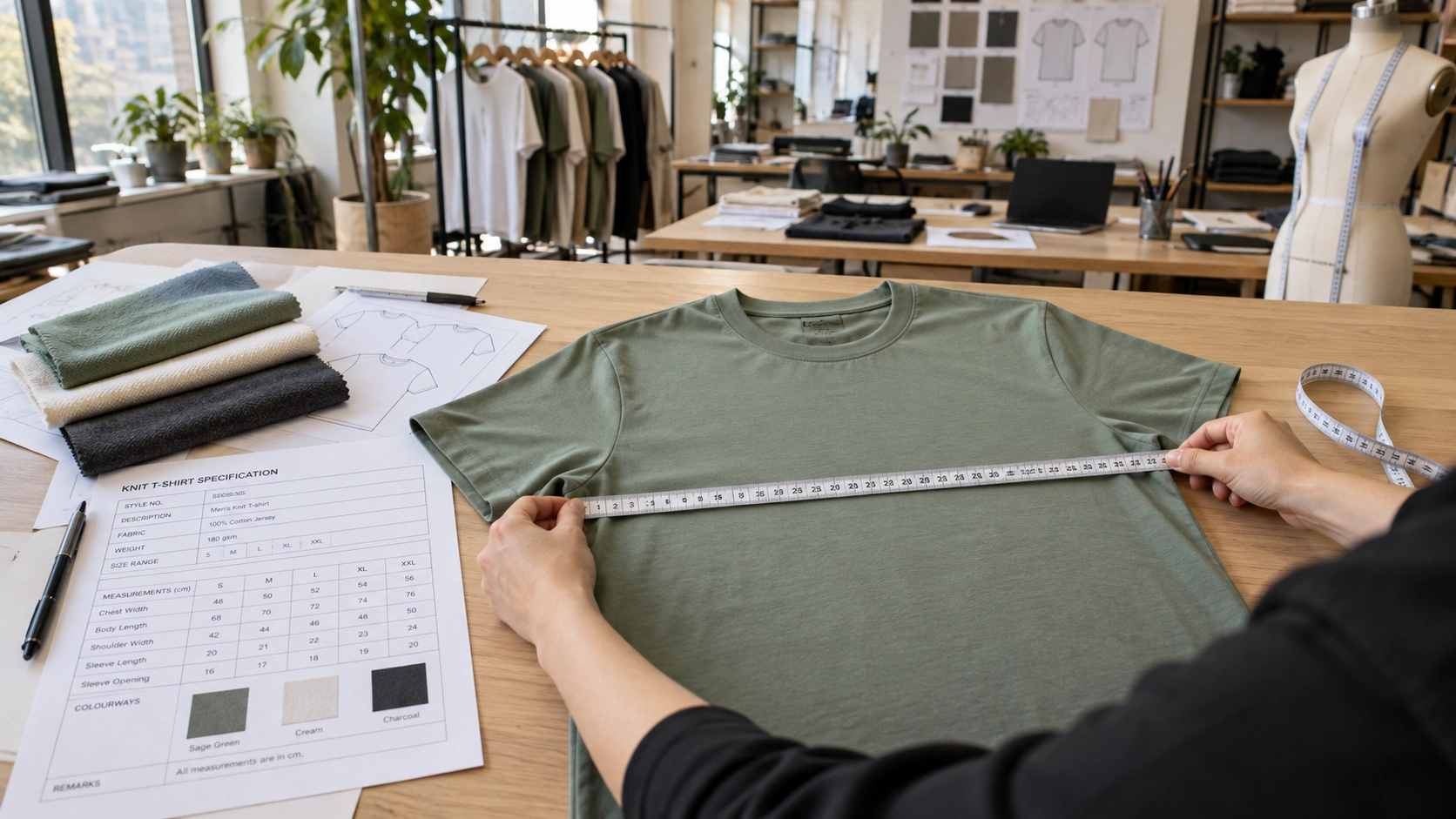
Garment measurement tolerances define how far a finished garment may vary from an approved point-of-measure specification while remaining acceptable for a particular project. For cut-and-sew knit apparel, buyers should define the measuring method, garment state, size-specific targets, allowable variation, inspection approach, and response to out-of-tolerance results before bulk production. A number without a measurement method is not a complete standard. Tolerances are project-specific; one universal tolerance is not appropriate for every garment or measurement point.
Why Measurement Tolerances Matter Beyond the Size Chart
A size chart describes intended dimensions. A manufacturing tolerance describes the permissible deviation around an approved target. These serve different purposes. A T-shirt may be labeled the correct size yet fail the agreed chest width or body length. Conversely, a small numerical deviation may be acceptable at one point of measure but critical at a fitted neckline or waistband.
In knit garments, fabric stretch, recovery, relaxation, finishing and handling affect the dimensions observed during inspection. The same garment can give different readings if it is stretched flat, measured immediately after pressing, or measured after an agreed conditioning period. A clear specification therefore connects the reference garment, measuring method and acceptance criteria rather than treating a spreadsheet as the entire standard.
Define Points of Measure Before Discussing Tolerance
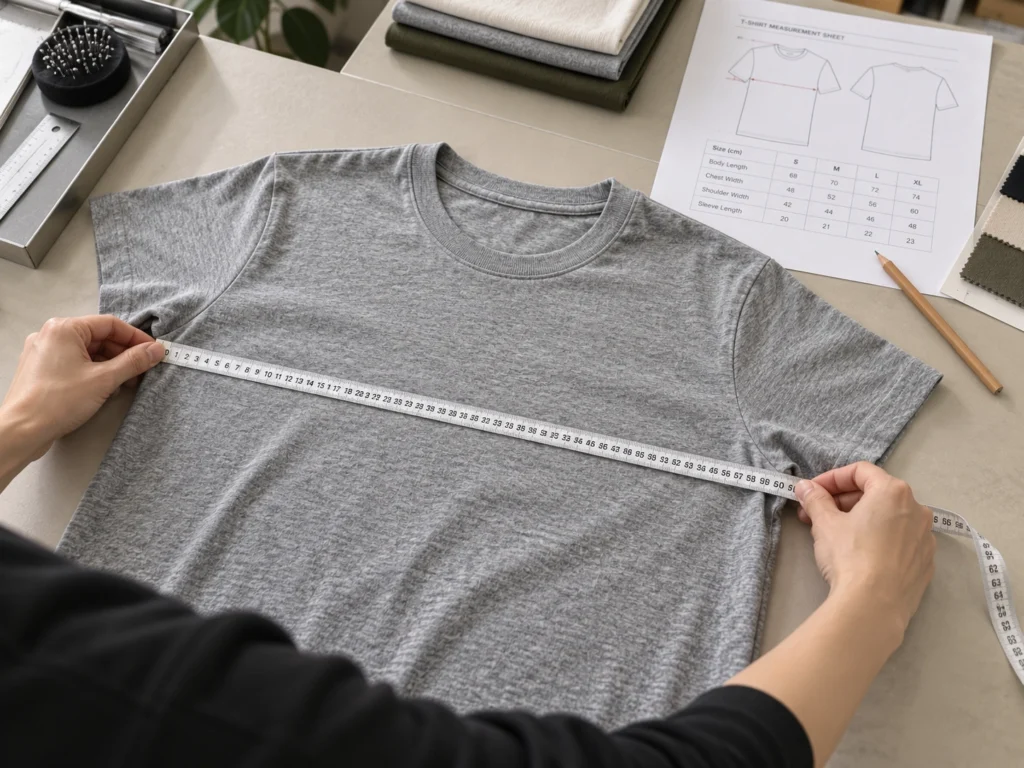
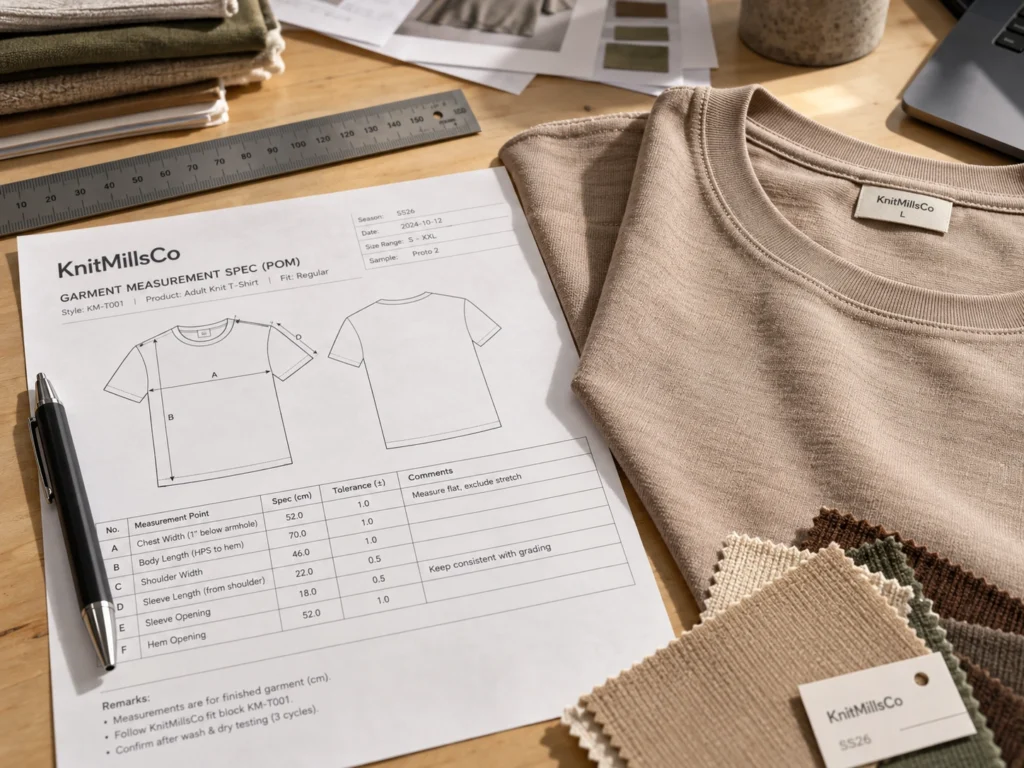
Begin with an identifiable approved sample or technical specification. Each point of measure (POM) should have a consistent name, a diagram showing precisely where to place the tape, the garment position, the intended dimension, the unit, and any applicable tolerance. Measurements should be described as flat widths, circumferences, vertical lengths or other dimensions as appropriate. A flat width must not be mistaken for a full-body circumference.
For a knit T-shirt, relevant POMs may include chest width at a defined distance below the armhole, body length from an agreed neck or shoulder reference, shoulder width, sleeve length, sleeve opening, and hem width. A fitted knit dress, jogger or hoodie will require its own POM structure. Do not import another garment category’s tolerance table unchanged.
| Point of measure | Definition that must be agreed | Potential ambiguity |
|---|---|---|
| Chest width | Flat garment position and exact vertical location below armhole | Different measuring heights produce different readings |
| Body length | Starting and ending landmarks, including treatment of neck trim | High-point-shoulder and center-back methods are not interchangeable |
| Sleeve length | Start point, sleeve position, and end point | Shoulder seam placement changes the reference |
| Hem opening | Measurement location and whether the edge is relaxed | Stretching the edge can artificially increase the value |
| Waistband (where applicable) | Relaxed flat width and any separately specified extended measurement | Relaxed and stretched measurements answer different questions |
A diagram and a reference sample should resolve the definition before measurements are recorded. This is especially important where multiple teams, factories or inspection parties will refer to the same technical specification.
Use a Repeatable Garment Measurement Method
Lay the garment on an agreed clean, flat surface. Smooth the sample consistently without applying unintended tension. Align seams and reference points as instructed by the approved measuring guide. Specify whether the item is measured after relaxation, steaming, washing or another defined process. Record whether the relevant POM is measured flat or around a contour.
A standard tape is helpful only when it is used at the correct location and without pulling the knit into a different shape. Operators should be able to reproduce the measurement using the same instructions. If two experienced reviewers consistently obtain different readings, review the method and diagram before deciding that the garment is defective.
Set Tolerances by Measurement Point and Garment Risk
There is no reliable single tolerance value for every knit garment. An acceptable variation depends on the silhouette, graded size, fabric behavior, production method, intended fit and the consequences of that particular dimension being outside its target. The project should explicitly identify dimensions that are more sensitive to fit or function.
For example, a small change in a fitted neck opening may be more noticeable than the same absolute change in an oversized body width. A waistband may need separate relaxed and extended requirements. Sleeve and hem measurements should reflect the approved design intent. These examples illustrate why tolerances should be defined through product evaluation; they are not recommended numerical tolerances.
Buyers can structure a specification as target dimension + permitted positive or negative deviation + measurement procedure. Some projects use symmetric allowances; others may justify asymmetric limits. In either case, the values should be confirmed during development and sample approval, not inferred from a generic online size chart.
Carry the Same Measurement Basis From Sampling to Bulk Production
A sample’s dimensions should be evaluated in the same manner planned for production inspection. When a sample is adjusted, the revised pattern, material reference, measurement chart and approval record must agree. Otherwise, an apparently approved sample may correspond to an outdated specification.
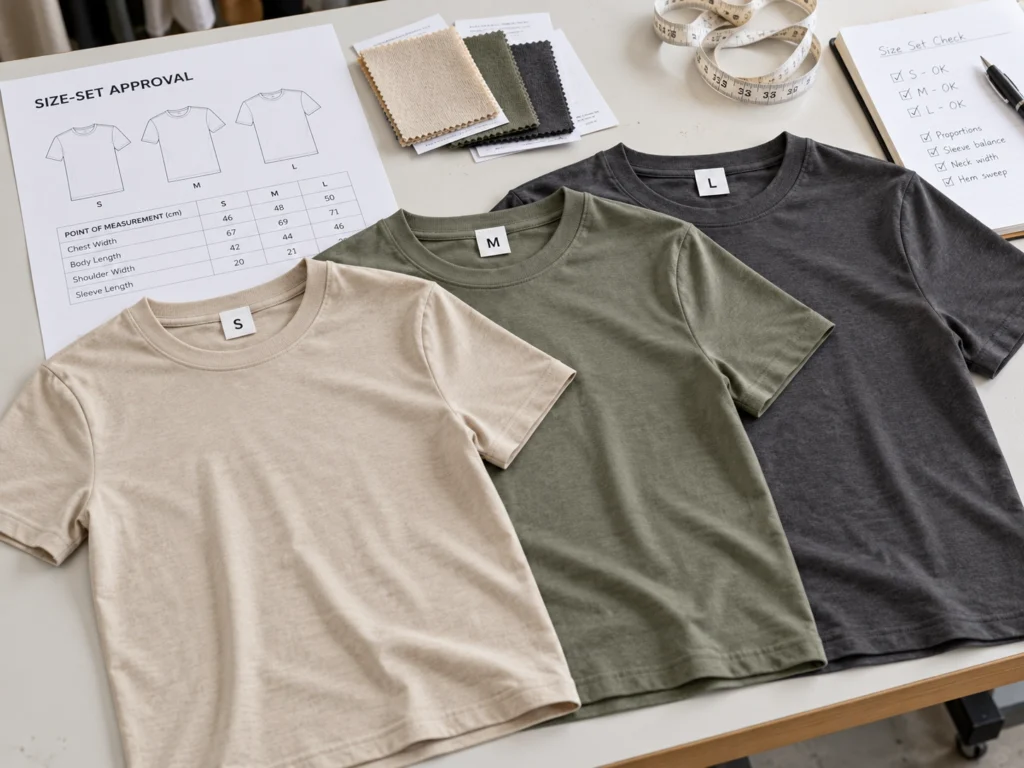
Before bulk production, confirm that the correct size set or approved reference has been reviewed, the critical POMs are identified, the graded measurements make sense across the size range, and the final tolerances are documented. A size chart alone does not prove grading accuracy. Size-specific checks matter because error patterns may differ between small and large sizes.
This decision process belongs with garment fit and pattern development and the wider Quality & Standards system. The goal is to preserve a repeatable acceptance basis, not to promise that every garment will measure identically.
What Should Happen When a Measurement Is Outside Tolerance?
An isolated out-of-tolerance reading is a reason to investigate, not a complete root-cause diagnosis. First confirm the style, size, approved specification version, measurement location, garment state and measuring method. Then remeasure according to the agreed procedure. If the result remains outside tolerance, document the affected POM and evaluate the scope of the issue.
The next action depends on the project agreement and evidence. Possible reviews include fabric relaxation, shrinkage or finishing response; cutting and pattern accuracy; seam assembly; or size grading. The team may need to inspect additional units, segregate affected stock, correct a process or seek a documented concession. The acceptance decision should be made against agreed standards, not informal judgment after production.
| Checkpoint | Evidence | Decision |
|---|---|---|
| Development | Draft POM definitions, design fit intent, material behavior | Which dimensions require tighter control? |
| Sample approval | Approved garment, confirmed size chart and measurement method | Is the acceptance basis complete? |
| Pre-production | Current spec revision, size grading and critical POM list | Are production and inspection aligned? |
| In-process checks | Recorded readings and issue tracking | Is a process correction needed? |
| Final release | Inspection records evaluated against the agreed criteria | Can the lot be released under the approved plan? |
Make Measurement Records Useful for Repeat Orders
Repeatability depends on knowing what was approved. Keep the relevant version of the measurement chart, POM diagrams, material and finishing references, accepted sample details, agreed tolerances, and records of authorized changes. If the next order uses a different fabric weight, structure or finish, assess whether its dimensional response changes the established fit or measurement basis.
Without an identifiable reference, the same size label can conceal gradual drift across batches. Measurement records support comparisons between the original approval and later production, but they only become useful when the measurement method and garment state remain consistent.
Buyer Checklist: Before Confirming Garment Measurement Tolerances
- Are all critical points of measure shown in clear diagrams?
- Is each target dimension assigned to the correct style and size?
- Does the specification define flat, relaxed or extended measurement conditions where relevant?
- Are the units, measuring tools and garment conditioning requirements documented?
- Have tolerances been agreed for individual POMs rather than copied blindly from another product?
- Is the approved sample consistent with the latest measurement chart?
- Is there a defined procedure for investigating and handling out-of-tolerance units?
- Will the same reference and method be used for later orders?
Frequently Asked Questions
What is a garment measurement tolerance?
It is the permitted deviation from an approved target dimension at a defined point of measure. The value is meaningful only when the measuring method, garment state, size and acceptance rule are also specified.
Is there one standard tolerance for all knit T-shirts?
No. Appropriate tolerances depend on the garment design, fabric response, measurement point, fit requirement and project acceptance basis. A single number should not be treated as universally suitable.
Should knit garments be measured stretched or relaxed?
Follow the approved specification. Many garment dimensions are reviewed with the garment flat and relaxed, while certain elastic features may require a separately defined extended measurement. The method must be consistent and documented.
Why do two people measure the same T-shirt differently?
Different measuring landmarks, tension, garment positioning, conditioning or tools can produce different readings. A detailed POM diagram and consistent method help reduce these differences.
Do approved sample measurements automatically guarantee bulk consistency?
No. Sample approval establishes a reference. Bulk consistency also requires aligned cutting and sewing processes, documented inspection procedures, review of deviations and traceable records across production batches.
From Measurement Chart to Approved Production Reference
Garment tolerances should support decisions about fit, production readiness and future reorders. Define the measurement points, agree on the permitted deviations, review them on real samples and keep a traceable record of the accepted standard. To evaluate a knit apparel project with existing reference garments, measurements or technical files, share your project for review. Unresolved measurement details can be identified during development rather than disguised as confirmed requirements.